CETP Model for Kenya’s Industrial Clusters: Cost Sharing + Compliance + Faster Approvals (Common Effluent Treatment Plant)
Kenya’s industrial growth is moving fast. Textile parks, leather hubs, food processing zones, chemical clusters, and Special Economic Zones need reliable wastewater treatment that is affordable, compliant, and quick to approve. A CETP Kenya approach solves this by treating wastewater from many industries at one shared facility. This page explains how a common effluent treatment plant works for Kenya, how clusters can govern and fund it, and why this model speeds approvals while protecting rivers, lakes, and communities.
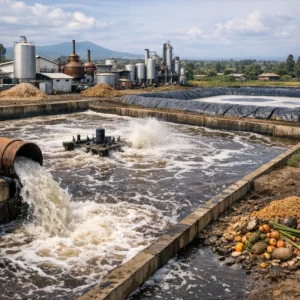
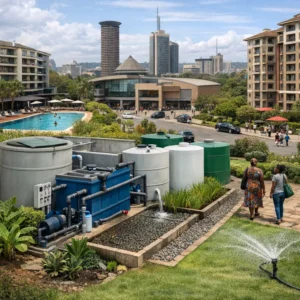
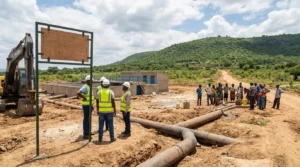
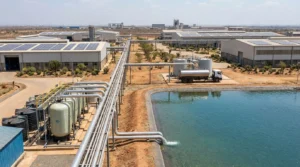
CETP Model for Kenya (Nairobi)
Kenya’s Industrial Push and the Wastewater Reality
Kenya is investing in industrial parks, SEZs, and county-led clusters to create jobs and exports. Water use is rising with this growth. Without a shared solution, each factory builds a small ETP, costs go up, and compliance becomes uneven. A shared ETP model offers one engineered system for many units, designed to meet Kenyan standards and international buyer expectations.
Key pressure points for clusters
- Limited land inside parks
- High capex for individual ETPs
- Skilled operators are scarce
- Approvals take time when designs differ
- Community and regulator trust must be earned
A common effluent treatment plant answers all five.
What a CETP Is and How It Fits Kenyan Clusters
A Common Effluent Treatment Plant (CETP) is a centralized wastewater treatment facility designed to collect, treat, and safely discharge or reuse effluent generated by multiple industries within a defined area. In the Kenyan context, CETPs deliver the greatest value when they are integrated at the industrial cluster or park planning stage, rather than added later as a corrective measure.
Why CETPs make sense for Kenya
As Kenya accelerates industrialization under Vision 2030, EPZs, SEZs, and county-driven industrial parks are expanding rapidly. Many industries—especially SMEs—lack the technical capacity, land, or capital to build compliant individual effluent treatment plants. CETPs address this gap by offering:
- Cost-effective wastewater management through shared infrastructure
- Regulatory compliance with NEMA, Water Act 2016, and county by-laws
- Environmental protection of rivers, groundwater, and downstream communities
- Operational efficiency via standardized treatment and professional management
- Opportunities for water reuse, supporting water-scarce regions in Kenya
Where CETPs fit best in Kenya
Textile and garment parks
These facilities generate high volumes of wastewater with dyes, salts, and organic loads. A CETP enables advanced treatment (including colour removal and tertiary treatment), making it ideal for EPZ and SEZ textile parks such as those in Naivasha, Athi River, and Kisumu.
Leather and tannery clusters
Tanneries produce complex effluent containing chromium, sulphides, and high BOD/COD. CETPs are especially critical for tannery clusters, such as those planned under the Kenya Leather Development Council, where centralized chrome recovery and sludge management are essential.
Food and agro-processing hubs
Agro-processing industries—tea, coffee, dairy, meat, fruit, and beverage plants—generate biodegradable but high-strength wastewater. A CETP allows efficient biological treatment and biogas recovery while ensuring compliance with discharge standards.
Chemical and pharmaceutical estates
These sectors require controlled, technically robust treatment systems. CETPs designed with physico-chemical and advanced treatment processes reduce environmental risk and simplify regulatory oversight.
Mixed-use industrial parks
In parks hosting diverse industries, CETPs provide a flexible, scalable solution that can accommodate varying effluent characteristics while avoiding the inefficiencies of multiple small treatment plants.
CETPs as shared industrial infrastructure
When properly planned, a CETP becomes core industrial infrastructure, equivalent to roads, power supply, or water distribution. It supports sustainable industrial growth by:
- Reducing pollution loads to Kenyan water bodies
- Enhancing investor confidence and park bankability
- Supporting circular economy approaches such as treated effluent reuse for cooling, washing, or irrigation
Design Modules for Kenyan Wastewater Types
Different clusters create different effluent. A good CETP uses modular design so capacity and processes grow with the park.
CETP Model for Kenya
Primary and Equalization
- Screening and grit removal
- Flow and load balancing
- Shock load protection
CETP Model for Kenya
Biological Treatment
- Aerobic systems for BOD and COD
- Anaerobic options for high-strength waste
- Nutrient control for sensitive catchments
CETP Model for Kenya
Tertiary and Advanced Treatment
- Filtration and polishing
- Color removal for textiles
- Salinity management for leather
Sludge and Resource Recovery
- Sludge thickening and dewatering
- Biogas options where feasible
- Safe disposal aligned to Kenyan rules
This modular approach keeps the industrial park wastewater treatment system stable even as tenants change.
CETP Model for Kenya
Governance Models That Work in Kenya
Technology alone is not enough. Governance makes or breaks a CETP.
Cluster SPV Model
An SPV owned by park tenants runs the CETP. Fees are based on flow and pollution load. This model suits SEZs with anchor tenants.
Utility-Style Operator
A professional operator manages the plant under a long-term contract. Industries pay tariffs. This gives consistent compliance.
County–Private Partnership
County provides land and approvals. Private partner designs, builds, and operates. This is useful for regional clusters.
Good governance outcomes
- Clear rules on discharge quality
- Transparent billing
- Faster decisions with one authority
Cost Sharing That Makes Business Sense
A shared ETP model reduces capex and opex for each factory.
CETP Model for Kenya
Typical Cost Split (Illustrative)
| Cost Head | Individual ETP | CETP Shared |
| Land | High per unit | Shared |
| Civil works | Repeated | One-time |
| Skilled staff | Many teams | Central team |
| Power and chemicals | Fragmented | Optimized |
| Compliance risk | Uneven | Central control |
For most clusters, CETP cuts lifecycle cost by 25–40% while improving reliability. CETP Model for Kenya
Compliance Pathway and Faster Approvals
Regulators prefer one strong design over many small ones. A CETP allows early engagement, pilot testing, and phased approvals.
Why approvals move faster
- Single design basis
- Clear influent standards for tenants
- Central monitoring and reporting
- Easier audits and inspections
This approach aligns with Kenya’s industrial expansion goals and environmental protection.
Water Reuse and Circular Benefits
Water scarcity is real. CETPs can supply treated water for:
- Cooling towers
- Washing and utilities
- Landscaping within parks
Reuse reduces freshwater intake and builds community trust.
Sector Focus: Textiles and Garments
Textiles drive exports but create colored, variable effluent. A CETP with color removal and reuse helps meet buyer codes and local rules.
Key needs
- Color and COD control
- Peak load handling during dyeing
- Consistent quality for reuse
A centralized system keeps small units compliant without heavy capex.
Sector Focus: Leather and Tannery Clusters
Leather effluent has high salinity and chromium. CETP design must include targeted removal and safe sludge handling.
Key needs
- Chrome recovery options
- Salinity management
- Odor control
Shared treatment reduces risk near towns and rivers.
Sector Focus: Food and Agro-Processing
High organic load but good biogas potential. CETPs can turn waste into energy.
Key needs
- Anaerobic treatment
- Stable operation during harvest peaks
- Hygienic reuse options
Digital Monitoring and Transparency
Modern CETPs use sensors and dashboards. This builds confidence with regulators and buyers.
Benefits
- Real-time compliance
- Early fault alerts
- Fair billing by load
Two Detailed Success Stories
Success Story 1: Textile Cluster in Central Kenya
A growing textile park with 38 units faced rising costs and delayed approvals. Individual ETPs were not feasible.
Solution
- One CETP sized for phased growth
- Equalization for dye peaks
- Advanced color removal
- Reuse line for utilities
Results
- Approval time reduced by 30%
- Operating cost per unit dropped by 35%
- Reuse met 25% of park demand
- Zero non-compliance notices in first year
This CETP Kenya project helped the park attract export buyers.
Success Story 2: Leather Hub Near Rift Valley
Small tanneries struggled with chrome management and community concerns.
Solution
- Centralized chrome recovery
- Anaerobic plus aerobic treatment
- Professional operator model
Results
- Stable effluent quality year-round
- Sludge risk reduced
- Community complaints fell sharply
- Cluster expanded without new land
The industrial cluster wastewater system protected livelihoods and water bodies.
Why Arnym Eco Green Pvt. Ltd.
Arnym Eco Green Pvt. Ltd brings hands-on wastewater expertise for shared infrastructure in emerging industrial regions.
What sets Arnym apart
- Deep understanding of common effluent treatment plant design
- Cluster-first planning, not one-size-fits-all
- Governance and tariff structuring support
- Phased delivery to match park growth
- Operator training and handholding
Arnym focuses on practical compliance, not over-designed systems.
Alignment with Watertech Kenya 2026
Watertech Kenya 2026 will spotlight solutions that scale with industry. CETPs match this vision by combining technology, governance, and finance into one platform. Industrial developers, counties, and investors will look for ready-to-deploy CETP models that shorten timelines and reduce risk.
Arnym’s approach fits the conversation Kenya is having about sustainable industrial water.
Comparison: CETP vs Individual ETPs
| Factor | Individual ETP | CETP |
| Capital cost | High per unit | Shared |
| Compliance | Uneven | Central |
| Expansion | Hard | Modular |
| Monitoring | Fragmented | Unified |
| Community impact | Variable | Managed |
Typical Implementation Roadmap
Phase 1: Cluster Assessment
- Water balance and load study
- Tenant mapping
Phase 2: Concept and Governance
- Design modules
- Cost sharing rules
Phase 3: Build and Commission
- Phased construction
- Operator training
Phase 4: Operate and Expand
- Digital monitoring
- Capacity upgrades
This roadmap suits Kenya’s fast-moving parks.
GET IN TOUCH
Arnym Eco Green Pvt. Ltd.
1001, Vantage Tower C,
Level 10, NDA Road, Bavdhan
Pune 411 021 India.
Tel: + 91 20 67872229
Cell: + 91 98607 46464
Email: ceo@arnymecogreen.com
PRODUCTS AND SERVICES
Explore More Products & Services
Industries
RESOURCES
🌊 Ensure Kenya Water Quality Regulations 2024 Compliance Now! ⚖️
Industries: Upgrade your ETP/STP, secure Effluent Discharge Licence, and ace the Compliance Checklist with Arny Mecogreen’s expert wastewater solutions!
📍 Pune, India HQ: Arnym Eco Green Pvt. Ltd. Eleven West Tower, Level 2, Pan Card Club Road, Baner, Pune, Maharashtra 411045 India
Other: +91 20 67872229 | +91 85305 55605
Connect on Social: