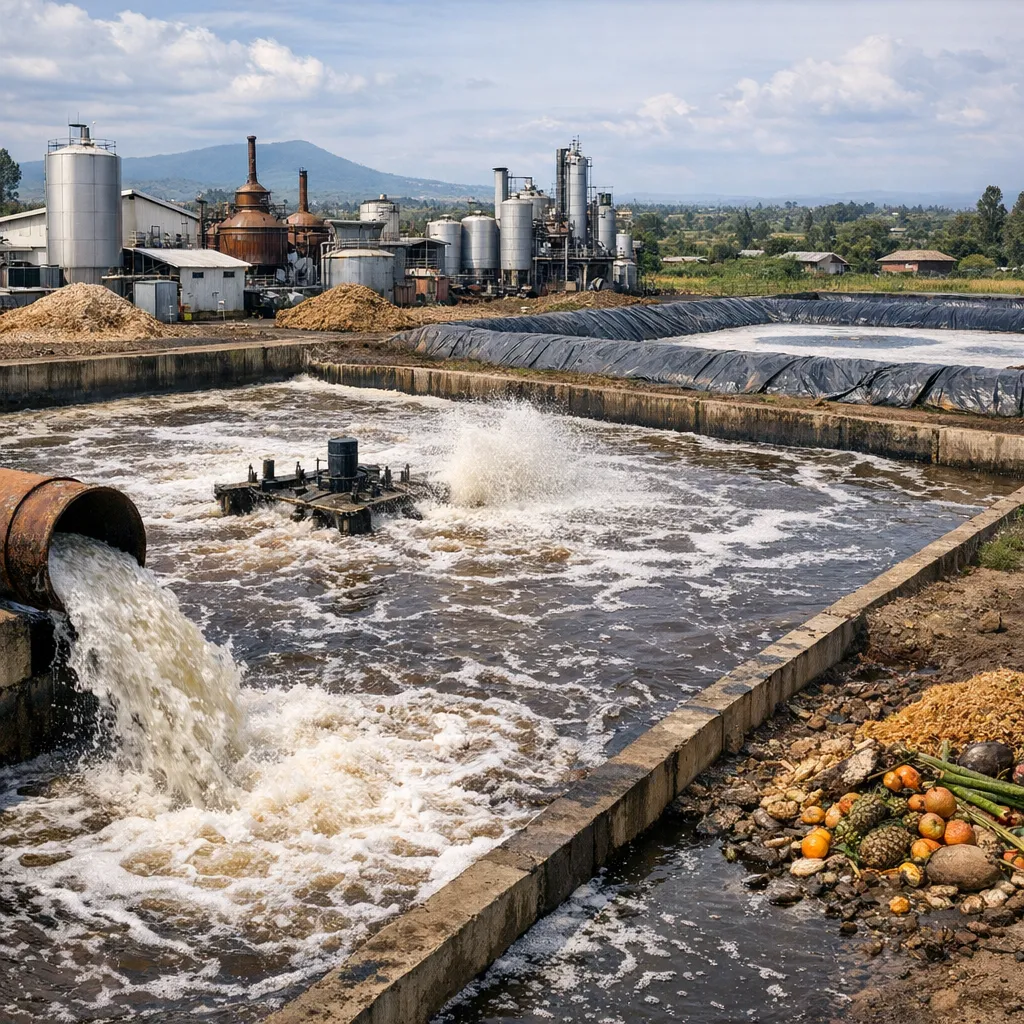
Wastewater-to-Value in Kenya: Turning Sludge & Effluent into Biogas and Reuse Water (Wastewater in Kenya)
Circular Economy Playbook for Manufacturers
Kenya’s industries are under pressure to grow, cut costs, reduce emissions, and stay resilient to water stress. Wastewater is no longer just a compliance issue. It is a resource. When treated the right way, sludge and effluent can create biogas, reusable water, and long-term savings. This page explains how Kenyan manufacturers can turn wastewater into value, using practical systems that work in local conditions.
Wastewater Circular Economy in Kenya: From Cost Centre to Value Stream
Kenya is increasingly constrained by water scarcity, volatile energy prices, and tightening environmental regulation. At the same time, industrial facilities across the country discharge millions of litres of wastewater every day—often treated only to meet compliance requirements and then discarded. This linear “use–treat–dispose” model represents a missed economic and environmental opportunity.
A wastewater circular economy reframes wastewater as a resource rather than a liability. Through advanced treatment, recovery, and reuse systems, industries can close the loop by reusing treated water, recovering energy from organic waste, and minimising residual waste. This approach aligns directly with wastewater circular economy objectives in Kenya, particularly across water-intensive sectors such as food and beverage processing, textiles, pharmaceuticals, chemicals, and large industrial parks.
By shifting from disposal-driven treatment to value recovery, wastewater systems can move from being a recurring operating cost to a strategic asset that improves competitiveness and sustainability.
Why It Matters for Kenyan Industry
Kenyan manufacturers face a unique convergence of structural and operational challenges that make wastewater circular economy solutions not just attractive, but increasingly necessary.
High Cost of Freshwater Abstraction
Groundwater abstraction and surface water intake involve rising costs linked to permitting, pumping energy, infrastructure, and regulatory fees. In many regions, over-abstraction is also triggering tighter controls, making alternative water sources critical.
Unreliable Water Supply During Dry Seasons
Seasonal droughts and climate variability routinely disrupt water availability, forcing factories to reduce production or halt operations altogether. Dependence on external water sources exposes businesses to operational risk.
Rising Power Tariffs
Electricity costs in Kenya continue to increase, particularly for energy-intensive industries. Wastewater treatment itself can be a significant power consumer if not optimised for energy recovery.
Pressure to Meet ESG and Climate Targets
Local and multinational manufacturers alike are under growing pressure from investors, customers, and parent companies to demonstrate measurable progress on environmental, social, and governance (ESG) performance, including water stewardship and emissions reduction.
Tighter Discharge Norms from Regulators
Regulatory scrutiny on effluent quality is increasing, with stricter enforcement by environmental authorities. Non-compliance exposes companies to penalties, shutdowns, and reputational damage.
Rather than paying continuously to treat and dispose of wastewater, forward-looking manufacturers are using circular solutions to recover water, energy, and nutrients—turning compliance infrastructure into a source of operational value.
Climate, Cost Savings, and Industrial Resilience Through Wastewater
Modern wastewater solutions are no longer peripheral utilities; they are central to climate action, cost control, and long-term industrial resilience in Kenya. Smart treatment and recovery systems directly address emissions, resource efficiency, and business continuity.
Climate Impact
Effective wastewater management plays a significant role in reducing industrial greenhouse gas emissions.
- Capturing methane from sludge through anaerobic digestion prevents uncontrolled release of a potent greenhouse gas.
- Recovered biogas can replace diesel, LPG, or grid electricity, reducing reliance on fossil fuels.
- Reusing treated wastewater lowers abstraction from rivers and aquifers, protecting ecosystems and improving catchment resilience.
Cost Savings
Circular wastewater systems deliver tangible and recurring financial benefits.
- Biogas utilisation significantly reduces fuel and electricity expenditure.
- Water reuse cuts costs associated with freshwater purchase, abstraction, and transport.
- Improved sludge treatment lowers handling, transport, and disposal costs.
- Reduced exposure to water and energy price volatility stabilises operating costs, particularly during drought periods.
Resilience
Beyond cost and compliance, wastewater circularity strengthens operational resilience.
- On-site energy generation from biogas improves energy security and reduces dependence on the grid.
- Reclaimed water ensures a reliable supply of process and utility water even when municipal or natural sources are constrained.
- Reduced vulnerability to water shortages translates into fewer production interruptions and improved planning certainty.
For these reasons, ESG-driven wastewater management has evolved into a board-level strategic priority for Kenyan manufacturers—linking sustainability performance directly to profitability, risk management, and long-term growth.
Biogas from Sludge in Kenya: Energy Hidden in Waste
Industrial wastewater treatment sludge is rich in biodegradable organic matter, particularly from food, beverage, agro-processing, and pulp-based industries. When this sludge is managed through anaerobic digestion, the organic compounds are biologically converted into biogas—a renewable fuel primarily composed of methane.
In the Kenyan context, where energy costs are high and power reliability can be variable, biogas recovery from sludge represents a practical opportunity to convert an unavoidable waste stream into a dependable source of on-site energy. Instead of viewing sludge as a disposal problem, industries can treat it as an energy carrier embedded within wastewater treatment operations.
How Biogas Systems Work
Biogas recovery from sludge follows a proven and scalable treatment sequence designed to maximise gas yield while stabilising residual solids.
Sludge Thickening and Stabilisation
Waste activated sludge and primary sludge are first thickened to increase solids concentration. This step reduces digester volume requirements and improves process efficiency. Pre-stabilisation may be applied to optimise digestion performance.
Anaerobic Digestion
Thickened sludge is fed into sealed anaerobic digesters, where microorganisms break down complex organic matter in the absence of oxygen. This controlled biological process converts organics into biogas while significantly reducing volatile solids.
Biogas Collection and Cleaning
The generated biogas is captured from the digester headspace and passed through cleaning systems to remove moisture, hydrogen sulfide, and other impurities. This conditioning step ensures safe and efficient downstream use.
Energy Utilisation
Cleaned biogas can be used directly in boilers for steam generation, in gas engines for electricity production, or in combined heat and power (CHP) systems to maximise energy recovery. In thermal-intensive industries, biogas can directly offset fossil fuel consumption.
This integrated approach forms the backbone of biogas from sludge projects in Kenya, already being implemented in breweries, food processing plants, and agro-industrial facilities seeking to reduce both energy costs and environmental impact.
Where Biogas Fits Best
Biogas recovery from sludge is most viable in industries that generate high-strength wastewater with consistent organic loading.
Food and Beverage Factories
These facilities produce wastewater rich in sugars, starches, and fats, making them ideal candidates for high biogas yields.
Breweries and Distilleries
Spent grains, yeast residues, and process effluent create sludge with excellent anaerobic digestion potential, enabling significant energy recovery.
Dairy and Meat Processing
High organic content from proteins and fats supports stable digestion and consistent biogas production.
Pulp and Paper Units
Organic fibre residues in sludge can be partially converted to biogas, reducing disposal volumes and treatment costs.
Large Industrial Estates
Centralised wastewater treatment plants serving multiple tenants can aggregate sludge streams, improving economies of scale for biogas systems.
Typical Benefits
Well-designed biogas-from-sludge systems deliver measurable operational, financial, and environmental advantages.
Energy Cost Reduction
On-site biogas utilisation typically reduces overall energy costs by 20–40%, depending on wastewater strength, energy demand, and system design.
Lower Carbon Footprint
Replacing diesel, heavy fuel oil, LPG, or grid electricity with biogas significantly cuts greenhouse gas emissions and supports corporate climate commitments.
Reduced Sludge Volume
Anaerobic digestion stabilises sludge and reduces its volume, lowering transport, handling, and disposal costs.
Stable and Predictable Waste Management
Digesters provide consistent sludge treatment performance, improving regulatory compliance and reducing operational risk.
Industrial Water Reuse: Making Every Drop Count
Water reuse is no longer optional in Kenya. Industries are reusing treated wastewater for utilities, cooling, washing, and even process water.
Reuse Applications
- Cooling towers
- Boiler feed (after polishing)
- Floor and equipment washing
- Gardening and green belts
- Toilet flushing
Advanced treatment ensures safe and reliable reuse, aligned with industrial water reuse practices suitable for Kenyan conditions.
Reuse Treatment Train
- Primary & secondary treatment
- Advanced filtration
- Membrane systems (UF, RO)
- Disinfection and polishing
This approach reduces dependence on freshwater and improves operational stability.
Zero Liquid Discharge Kenya (ZLD): When Water Loss Is Not an Option
For industries with high water risk or strict discharge limits, zero liquid discharge Kenya (ZLD) systems provide a closed-loop solution.
What ZLD Means
- No wastewater leaves the site
- Maximum water recovery
- Salts and solids managed safely
When ZLD Makes Sense
- Water-stressed locations
- Export-oriented factories
- High ESG expectations
- Industrial parks and SEZs
ZLD Value Drivers
- Up to 95% water recovery
- Full regulatory compliance
- Strong ESG positioning
- Long-term water security
ZLD is no longer just for large multinationals. Modular designs make it viable for mid-sized Kenyan plants.
Sector-Specific Wastewater Solutions in Kenya
Food & Beverage Industry
- High organic load wastewater
- Ideal for biogas recovery
- Strong ROI from energy savings
Textile & Apparel
- High water consumption
- Colour and chemical treatment
- Strong case for reuse and ZLD
Pharmaceuticals & Chemicals
- Complex effluent streams
- Need for advanced treatment
- ESG-driven compliance
Industrial Parks & SEZs
- Centralised treatment plants
- Shared reuse infrastructure
- Scalable circular economy models
Each sector needs a tailored design, not a one-size-fits-all plant.
Success Story 1: Food Processing Plant Turning Sludge into Energy
Background
A large food processing factory in Kenya was facing:
- High diesel costs for boilers
- Frequent sludge disposal issues
- Rising water bills
Solution Implemented
- Anaerobic digestion of wastewater sludge
- Biogas storage and boiler integration
- Secondary treatment with reuse for utilities
Results
- 35% reduction in fuel cost
- Sludge volume reduced by over 50%
- Reuse water covered cooling and washing needs
- Improved ESG reporting and compliance
This project clearly demonstrated the power of wastewater circular economy Kenya in action.
Success Story 2: Textile Manufacturer Achieving Near-ZLD
Background
A textile unit supplying export markets faced:
- High water usage
- Strict buyer ESG audits
- Risk of production stoppage during drought
Solution Implemented
- Advanced biological treatment
- Membrane-based water reuse
- Concentrate management system
Results
- Over 90% water reused on-site
- Stable production during dry seasons
- Improved buyer confidence
- Long-term cost control
This case shows how zero liquid discharge Kenya strategies improve both compliance and competitiveness.
ESG Wastewater Management: What Investors and Buyers Look For
Global buyers and investors now review wastewater performance closely. Kenyan manufacturers exporting to Europe, UK, and Middle East must show action.
Key ESG Expectations
- Reduced freshwater withdrawal
- Energy recovery from waste
- Lower emissions footprint
- Transparent reporting
Wastewater systems directly support ESG scores and future-proof business operations.
Regulatory and Policy Direction in Kenya
Kenya’s policy direction supports:
- Water reuse
- Renewable energy
- Circular economy models
- Emission reduction
Forward-looking manufacturers are acting early, before regulations tighten further.
Preparing for Watertech Kenya 2026 – Water Technology Trade Exhibition
Watertech Kenya 2026 will place strong focus on:
- Industrial water reuse
- Biogas and energy recovery
- Circular economy technologies
- Climate-smart wastewater systems
Manufacturers attending the expo should be ready with:
- Clear wastewater strategies
- Upgrade plans for existing plants
- ESG-aligned investment roadmaps
This event will shape how wastewater circular economy Kenya evolves in the coming years.
Why Arnym Eco Green Pvt. Ltd for Kenya’s Wastewater-to-Value Projects
Arnym Eco Green Pvt. Ltd works with a clear focus on value-driven wastewater solutions, not just treatment plants.
What Makes Arnym Eco Green Different
- Strong expertise in biogas from sludge systems
- Proven industrial water reuse designs
- ZLD-ready engineering for Kenyan conditions
- Lifecycle cost-focused approach
- Scalable and modular solutions
Value for Kenyan Manufacturers
- Lower operating costs
- Reliable performance
- ESG-ready infrastructure
- Long-term water and energy security
Arnym Eco Green aligns technology with business outcomes.
Wastewater-to-Value Technology Comparison
| Approach | Water Savings | Energy Recovery | ESG Impact | Best Fit |
| Conventional ETP | Low | None | Basic | Compliance only |
| Reuse-Focused ETP | Medium | None | Moderate | Water-stressed sites |
| Biogas + Reuse | High | High | Strong | Food & agro |
| ZLD Systems | Very High | Medium | Very Strong | Export & SEZ |
Implementation Roadmap for Kenyan Manufacturers
Step 1: Wastewater Audit
Understand flow, load, and variability.
Step 2: Value Mapping
Identify reuse points and energy potential.
Step 3: Technology Selection
Choose systems that fit operations and budget.
Step 4: Phased Execution
Start with reuse or biogas, scale to ZLD if needed.
Step 5: Monitoring & Optimisation
Ensure stable performance and savings.
🌊 Ensure Kenya Water Quality Regulations 2024 Compliance Now! ⚖️
Industries: Upgrade your ETP/STP, secure Effluent Discharge Licence, and ace the Compliance Checklist with Arny Mecogreen’s expert wastewater solutions!
📍 Pune, India HQ: Arnym Eco Green Pvt. Ltd. Eleven West Tower, Level 2, Pan Card Club Road, Baner, Pune, Maharashtra 411045 India
Other: +91 20 67872229 | +91 85305 55605
Connect on Social:
Related Water Treatment Resources
- Wastewater in Kenya
- Wastewater Projects in Kenya
- CETP Model for Kenya
- Food and Beverage Wastewater in Kenya
- High TDS Borehole Water in Kenya
- Greywater Recycling
- MBR vs MBBR vs SAFF vs FAB for Kenya
- Water Reuse in Kenya
- Consent to Discharge into Sewer
- Kenya Water Quality Regulations 2024
- Water Treatment Chemicals
- Water Treatment Services in Indonesia
- Water Treatment Services in Malaysia
- Water Treatment Services in Vietnam
- Water Treatment Services in Thailand
- Water Treatment Companies in Philippines
- Top Water Treatment Services in Philippines
- Challenges Facing the Water Industry
- Calculate Your Savings Every Month
- Water Technologies
- Water Treatment Solutions
- RO Plant
- Mineral Water Plant
- UF System
- UV Plant
- Water Softner
- DM Plant
- Fully Automatic Water Filtration System
- Turnkey Project for Drinking Water
- Spares Consumables
- Waste Water Technologies
- Sewage Treatment Plant
- Effluent Treatment Plant
- Common Effluent Treatment Plant
- Grey Water Management