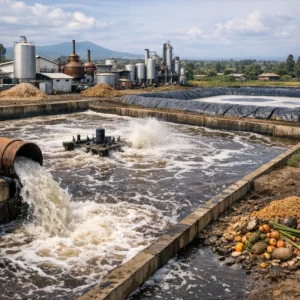
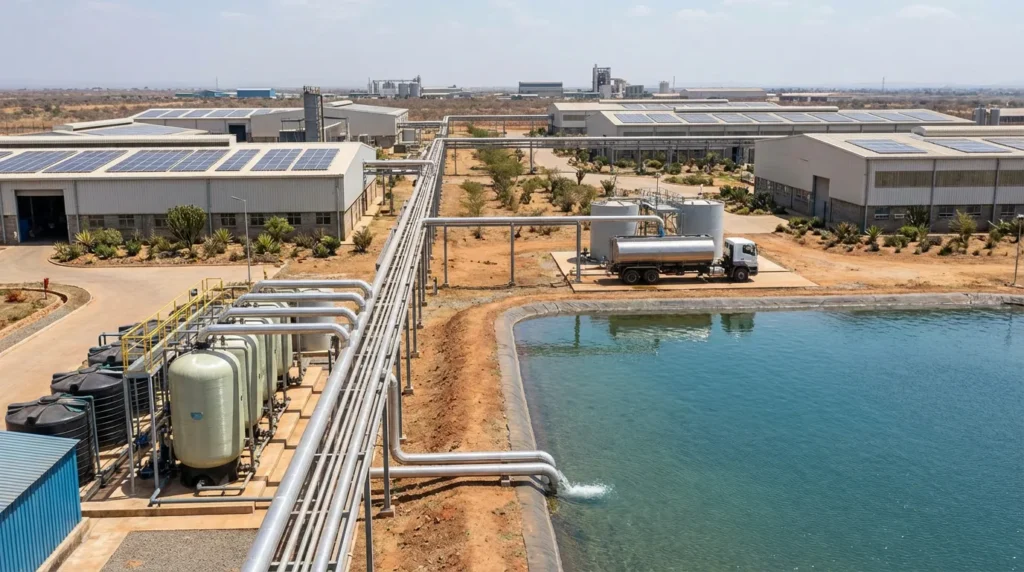
Food and Beverage Wastewater in Kenya (Dairy, Breweries, Distilleries): Typical ETP Problems and Proven Fixes
Kenya’s food and beverage sector is growing fast. Dairy processors, breweries, and distilleries are expanding to meet local and export demand. With this growth comes one serious challenge: wastewater management. High-strength effluent from milk processing, beer brewing, and alcohol distillation can damage rivers, create odor complaints, and lead to heavy penalties if not treated correctly.
This page explains real ETP pain points in Kenya, why they happen, and how proven treatment architectures work on the ground. The focus is practical, not theoretical.
Food and beverage wastewater is fundamentally different from ordinary municipal sewage. It is typically high-strength, highly variable, and biologically unstable, with characteristics that can change from hour to hour depending on production activities. From a Kenyan wastewater treatment perspective, these differences make Effluent Treatment Plant (ETP) design and operation significantly more complex.
As a wastewater specialist working with food industries across Kenya, several country-specific factors consistently shape how food industry wastewater must be managed.
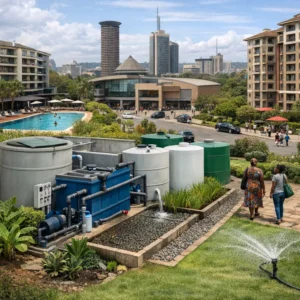
Food and Beverage Wastewater in Kenya (Nairobi)
1. Highly Variable Raw Materials
Kenya’s food and beverage sector relies heavily on seasonal and agricultural raw materials—milk, fruits, cereals, sugarcane, coffee, and edible oils. Variations in crop quality, moisture content, and sugar or fat levels directly affect wastewater parameters such as COD, BOD, TSS, oils & grease, and pH.
For example:
- Fruit processing wastewater fluctuates during harvest seasons
- Dairy effluent strength changes with milk quality and cleaning cycles
This variability demands robust and flexible wastewater treatment systems, not fixed municipal-style designs.
2. Intermittent and Batch-Based Production
Many Kenyan food factories operate on batch processes or intermittent production schedules, especially SMEs. Production may stop due to raw material shortages, power interruptions, or market demand. As a result:
- Wastewater flow is inconsistent
- Shock loads are common
- Biological treatment systems face stress or partial die-off
ETPs must therefore be designed to handle flow and load fluctuations without compromising compliance.
3. Limited Land Availability
Industrial land in and around Nairobi, Thika, Athi River, Naivasha, and Mombasa is increasingly scarce and expensive. Food processors often have very limited space for wastewater treatment infrastructure.
This limits the use of large lagoons or conventional stabilization ponds and pushes the need for:
- Compact ETP designs
- High-rate biological systems
- Integrated treatment units
Space constraints are a critical design consideration for food industry wastewater treatment in Kenya.
4. Increasing Regulatory Enforcement
Environmental compliance in Kenya has tightened significantly. NEMA and county governments are now actively enforcing:
- Effluent discharge standards
- Licensing and Environmental Audits
- Penalties for non-compliance
Food processors discharging untreated or partially treated wastewater into sewers, rivers, or soak pits are facing fines, plant shutdowns, and reputational risk. This has made compliant ETP design, operation, and monitoring a business necessity—not an option.
5. Why Food Industry ETP Projects Are More Complex
Due to the combined effects of variable wastewater strength, intermittent flows, limited land, and strict regulation, food and beverage ETP projects in Kenya require:
- Industry-specific process understanding
- Careful load equalization and buffering
- Skilled operation and maintenance
- Systems designed for future expansion and compliance
Generic wastewater solutions rarely work in the Kenyan food processing context.
Typical Wastewater Characteristics by Sector
| Industry | Main Pollutants | Average BOD/COD | Key Risk |
| Dairy | Milk fats, proteins, lactose | Very high BOD | Oil & grease overload |
| Brewery | Sugars, yeast, spent grains | High COD | Shock loads |
| Distillery | Spent wash, melanoidins | Extremely high COD | Color, odor, toxicity |
Dairy Wastewater Treatment in Kenya: The Ground Reality
Kenya’s dairy industry is one of the most developed agro-processing sectors in the country, covering milk chilling plants, yoghurt factories, cheese processing units, and milk powder plants. While production capacity has grown, dairy wastewater treatment remains a major operational and compliance challenge for many processors.
From on-the-ground experience as a Kenyan wastewater specialist, dairy effluent is among the most difficult food industry wastewaters to treat due to its strength, variability, and fat content.
Common Dairy Wastewater Treatment Challenges in Kenya
1. High Fats, Oils, and Grease (FOG)
Dairy wastewater contains significant amounts of milk fat, cream, and butter residues. These fats:
- Float in tanks and reactors
- Block pipelines and pumps
- Reduce oxygen transfer in biological systems
Many Kenyan dairy plants either undersize or completely skip proper fat separation systems, leading to chronic ETP failures and high maintenance costs.
2. Sudden BOD and COD Shock Loads
Clean-in-Place (CIP) operations are a major issue in dairy ETPs. During CIP:
- Concentrated milk residues
- Sugars, proteins, and cleaning chemicals
are discharged over a short time period, causing sudden spikes in BOD, COD, and conductivity. Without proper buffering, these shock loads:
- Kill biological bacteria
- Cause treatment upsets
- Lead to non-compliant effluent discharge
3. Extreme pH Fluctuations
Dairy cleaning processes use:
- Alkaline detergents (caustic soda-based)
- Acidic rinses (nitric or phosphoric acid)
This results in rapid pH swings, sometimes from pH 3 to pH 11 within hours. Uncontrolled pH variation severely affects both anaerobic and aerobic treatment systems, making pH control a critical design requirement for dairy wastewater treatment plants in Kenya.
4. Sludge Handling and Disposal Problems
Dairy effluent generates high volumes of biological sludge, especially when aerobic systems are overloaded. In Kenya:
- Sludge dewatering is expensive
- Licensed disposal sites are limited
- Transport costs are rising
Poor sludge management often becomes the hidden operating cost of dairy ETPs, reducing overall system sustainability.
Proven Dairy Wastewater Treatment Architecture in Kenya
Based on successful dairy ETP installations across Kenya, a combined anaerobic and aerobic treatment approach delivers the most reliable results.
Primary Treatment Section
The primary stage protects downstream biological systems and removes fats early.
Key units include:
- Mechanical screening to remove solids and packaging debris
- Dissolved Air Flotation (DAF) for efficient fat, oil, and grease removal
- Equalization tank with slow mixing to balance flow, BOD, and pH
Proper primary treatment is essential for stable dairy wastewater treatment performance.
Biological Treatment Section
Anaerobic Treatment
An anaerobic reactor handles high-strength dairy wastewater efficiently by:
- Achieving major BOD and COD reduction
- Producing minimal sludge
- Reducing aeration energy demand
Anaerobic systems are particularly effective for milk powder plants and large yoghurt factories.
Aerobic Treatment
An aerobic system follows anaerobic treatment to:
- Polish remaining BOD
- Remove ammonia and residual organics
- Ensure compliance with NEMA discharge standards
This two-stage biological approach improves stability and long-term performance.
Tertiary Treatment Section
Depending on discharge or reuse requirements, the tertiary stage may include:
- Clarifiers for final solids separation
- Membrane Bioreactors (MBR) where water reuse or very low effluent limits are required
Tertiary treatment is increasingly relevant as Kenyan dairy plants explore water reuse to reduce freshwater consumption.
Why Anaerobic + Aerobic Treatment Works Best for Dairy ETPs
The combined anaerobic–aerobic treatment architecture:
- Reduces overall energy costs
- Minimizes excess sludge generation
- Handles high organic loads effectively
- Improves compliance reliability under variable operating conditions
This makes it the most practical and proven dairy wastewater treatment solution in Kenya.
Brewery Effluent Treatment in Kenya: Managing Daily Load Variations
Kenya’s brewing industry consists of large commercial breweries as well as a rapidly growing number of small and craft breweries. While brewery wastewater is often assumed to be easy to treat, the reality on the ground is very different. From a Kenyan wastewater treatment perspective, brewery effluent is highly unstable, with daily and even hourly variations in flow and organic load.
Effective brewery effluent treatment requires systems specifically designed to manage these fluctuations while maintaining consistent compliance with NEMA discharge standards.
Typical Brewery Effluent Treatment Challenges in Kenya
1. COD Peaks During Brewing Operations
During mashing, lautering, and cleaning activities, wort losses and sugar-rich wastewater are discharged intermittently. These discharges cause sudden spikes in COD and BOD, often exceeding the design capacity of conventional treatment systems.
Without proper buffering, these COD peaks:
- Overload biological reactors
- Cause process instability
- Result in non-compliant effluent
2. Yeast Sludge Carryover
Brewery wastewater commonly contains spent and dead yeast, which:
- Increases suspended solids (TSS)
- Raises oxygen demand in aerobic systems
- Settles poorly in clarifiers
If yeast sludge is not effectively managed, it leads to frequent sludge handling issues and reduced treatment efficiency.
3. Odour Generation from Anaerobic Zones
Poorly designed or improperly operated anaerobic tanks can become septic, producing hydrogen sulfide and other sulfur compounds. This results in:
- Strong offensive odours
- Community complaints
- Increased scrutiny from regulators
Odour control is especially critical for breweries located near residential or commercial areas.
4. Space Constraints in Urban Breweries
Most breweries in Kenya are located in urban or industrial zones where land is limited and expensive. Expansion of ETP infrastructure is often not feasible, making compact and high-rate treatment technologies essential.
Brewery Effluent Treatment Solutions That Work in Kenya
Based on successful brewery ETP implementations across Kenya, a well-balanced combination of equalization, anaerobic treatment, and compact aerobic polishing delivers the most reliable results.
Equalization Is Not Optional
A properly sized equalization tank is the backbone of brewery wastewater treatment. It:
- Absorbs flow and load fluctuations
- Smoothens COD and pH variations
- Protects downstream biological systems
For breweries with multiple brewing cycles per day, large equalization capacity is essential for stable ETP performance.
High-Rate Anaerobic Treatment Systems
High-strength brewery effluent is well-suited for high-rate anaerobic reactors, such as:
- UASB (Upflow Anaerobic Sludge Blanket)
- EGSB (Expanded Granular Sludge Bed)
These systems:
- Achieve high COD reduction
- Produce minimal excess sludge
- Allow biogas recovery, which can be used to offset boiler or process fuel costs
Anaerobic treatment significantly reduces both energy consumption and operating costs.
Compact Aerobic Polishing Systems
Following anaerobic treatment, compact aerobic systems are used for final polishing. Proven technologies include:
- MBBR (Moving Bed Biofilm Reactor)
- IFAS (Integrated Fixed-Film Activated Sludge)
These systems offer:
- Smaller footprint
- Better tolerance to load variations
- Stable effluent quality under fluctuating conditions
They are particularly suitable for breweries with limited space and variable production schedules.
Ensuring Stable Compliance During Peak Brewing Cycles
The combined equalization + anaerobic + compact aerobic treatment architecture:
- Handles daily and seasonal load variations
- Minimizes odour and sludge problems
- Maintains compliance even during peak brewing periods
This approach has proven effective for both large breweries and craft breweries operating in Kenya.
Distillery Wastewater Treatment in Kenya: The Toughest Industrial Effluent
Distillery wastewater—particularly spent wash—is widely recognized as the most challenging industrial effluent in Kenya. From sugar-based distilleries to grain and molasses operations, distillery effluent is extremely strong, difficult to biodegrade, and environmentally hazardous if not properly treated.
From practical field experience in Kenya, distillery wastewater treatment requires carefully staged, high-strength treatment systems. Shortcuts almost always lead to failure, non-compliance, and conflict with regulators and surrounding communities.
Why Distillery Wastewater Is Dangerous
1. Extremely High COD Levels
Distillery spent wash can have COD concentrations exceeding 80,000 mg/L, far higher than most food and beverage effluents. This creates:
- Massive oxygen demand in receiving waters
- Rapid depletion of dissolved oxygen in rivers
- Severe aquatic life damage
Such loads cannot be handled by conventional treatment methods.
2. Dark Color That Blocks Sunlight
Distillery wastewater contains melanoidins and complex organic compounds that give it a dark brown or black color. When discharged untreated:
- Sunlight penetration in rivers is blocked
- Photosynthesis is inhibited
- Long-term ecological damage occurs
Color is one of the most visible compliance issues for distilleries in Kenya.
3. Strong Odour and Community Impact
Untreated or poorly treated spent wash releases intense organic and sulfur-based odours, leading to:
- Complaints from neighboring communities
- Intervention by county authorities and NEMA
- Risk of plant shutdowns
Odour control is a critical operational and social requirement.
Common Distillery ETP Failures in Kenya
1. Direct Aerobic Treatment
Attempting to treat distillery wastewater using aerobic systems alone almost always fails. The oxygen demand is too high, leading to:
- Excessive power consumption
- Biomass washout
- Complete system collapse
Aerobic treatment without prior load reduction is not viable.
2. Poorly Designed Anaerobic Systems
Anaerobic treatment is essential, but many systems fail due to:
- Insufficient hydraulic retention time (HRT)
- Poor reactor design
- Inadequate biomass development
Low retention time prevents stable microbial growth, resulting in poor COD removal.
3. Inadequate Cooling of Spent Wash
Spent wash is often discharged at elevated temperatures. Without proper cooling:
- Anaerobic and aerobic microbes are damaged
- Biological activity is suppressed
- Treatment efficiency drops sharply
Temperature control is a non-negotiable requirement.
4. Sludge Toxicity from Recalcitrant Compounds
Distillery wastewater contains melanoidins and phenolic compounds that inhibit biological activity. These compounds:
- Reduce microbial efficiency
- Cause sludge toxicity
- Limit achievable COD and color removal
Ignoring this aspect leads to chronic underperformance.
Proven Distillery Wastewater Treatment Approach in Kenya
Successful distillery ETPs in Kenya follow a multi-stage treatment architecture designed specifically for high-strength effluent.
Step 1: Pretreatment
Pretreatment stabilizes the wastewater before biological processes.
Key components include:
- Cooling systems to reduce temperature
- pH correction to protect biological reactors
- Equalization tanks to balance flow and load
This step prevents shock loading and microbial damage.
Step 2: High-Rate Anaerobic Digestion
Anaerobic treatment is the backbone of distillery wastewater treatment.
A properly designed high-rate anaerobic reactor:
- Achieves major COD reduction
- Handles extremely high organic loads
- Produces minimal sludge
Biogas capture from anaerobic digestion provides an opportunity for energy recovery, reducing fuel and operating costs.
Step 3: Aerobic Polishing
Following anaerobic treatment, aerobic polishing is required to:
- Remove residual BOD and COD
- Stabilize effluent quality
- Meet NEMA discharge standards
Technologies commonly used include extended aeration systems or MBBR, selected based on space and performance requirements.
Step 4: Color Reduction (If Required)
Where color limits apply, additional treatment may be necessary. Proven options include:
- Advanced oxidation processes (AOPs)
- Adsorption-based systems
Color removal is often the final compliance barrier for distilleries.
Why a Staged Treatment Approach Is Essential
For distillery wastewater in Kenya, a pretreatment + anaerobic + aerobic + color reduction strategy:
- Protects biological systems
- Maximizes COD removal efficiency
- Controls odour and toxicity
- Ensures long-term regulatory compliance
There is no single-step solution for distillery effluent.
High BOD COD Treatment: Why Systems Fail and How to Fix Them
Many ETPs fail not because of technology, but because of design shortcuts.
Top Reasons for ETP Failure
Undersized Tanks
Designed for average load, not peak load.
No Buffer for Shock Loads
Lack of equalization destroys biomass.
Wrong Microbial Selection
Generic cultures fail in food wastewater.
Poor Automation
Manual pH and nutrient dosing causes human error.
Reliable High BOD COD Treatment Strategy
- Design for peak COD, not average
- Combine anaerobic and aerobic stages
- Automate pH and nutrient dosing
- Train operators regularly
These basics ensure long-term stability.
Odor Control in Food Industry ETPs
Odor complaints can shut down operations.
Main Odor Sources
- Anaerobic tanks without gas capture
- Sludge holding areas
- Open drains carrying raw effluent
Practical Odor Control Measures
- Covered anaerobic reactors
- Biogas scrubbing
- Proper sludge dewatering schedule
- Maintaining aerobic conditions where required
Odor control must be part of the design, not an afterthought.
Sludge Management: The Hidden Cost Center
Sludge disposal is expensive in Kenya.
Why Sludge Volumes Increase
- Excess aeration
- Poor FOG removal
- Overdosing nutrients
Smart Sludge Reduction Techniques
- Anaerobic pretreatment
- Optimized sludge age
- Mechanical dewatering
Lower sludge means lower OPEX.
Two Wastewater Treatment Success Stories from East Africa
Across East Africa, and especially in Kenya, well-designed industrial wastewater treatment plants (ETPs) are proving that environmental compliance and cost efficiency can go hand in hand. The following two case studies—from the dairy and brewery sectors—demonstrate how correct process selection and engineering design lead to stable compliance, lower operating costs, and uninterrupted production.
Success Story 1: Large Dairy Processor in Central Kenya
Background
A large dairy processing facility in Central Kenya was facing persistent wastewater management challenges. Despite having an existing ETP, the plant struggled to maintain consistent compliance with NEMA effluent discharge standards, putting operations and reputation at risk.
Key Problems Identified
The dairy processor experienced:
- Frequent NEMA notices due to non-compliant effluent
- High fats, oils, and grease (FOG) loading the treatment system
- Rising sludge disposal costs, driven by excessive biological sludge generation
These issues were affecting both operational stability and overall treatment costs.
Wastewater Treatment Solution Implemented
A comprehensive ETP upgrade was implemented, focusing on upstream load reduction and process control:
- Dissolved Air Flotation (DAF) system for effective fat and oil removal
- Combined anaerobic and aerobic biological treatment to handle high organic loads efficiently
- Automated pH control system to manage CIP-related pH fluctuations
The design was tailored specifically for dairy wastewater characteristics in Kenya.
Measurable Results Achieved
Following implementation:
- BOD reduction exceeded 95%, consistently meeting NEMA limits
- Odour complaints from surrounding communities stopped completely
- Sludge volume reduced by approximately 40%, lowering disposal and transport costs
The plant achieved stable regulatory compliance while significantly reducing long-term operating expenses.
Success Story 2: Brewery Expansion Project in the Nairobi Region
Background
A brewery in the Nairobi metropolitan region was undergoing production expansion. Existing wastewater treatment infrastructure could not support increased volumes and higher organic loads, posing a risk to the expansion plan.
Key Problems Identified
The brewery faced:
- Severe COD spikes during peak brewing cycles
- Very limited space for ETP expansion
- High electricity consumption, driven by aeration-heavy treatment processes
Without intervention, ETP failures would have disrupted production growth.
Wastewater Treatment Solution Implemented
A compact, high-efficiency treatment system was designed to match space and load constraints:
- High-rate anaerobic reactor to manage high COD loads
- Compact MBBR (Moving Bed Biofilm Reactor) system for aerobic polishing
- Biogas recovery and reuse in the boiler, offsetting fuel consumption
This approach minimized footprint while maximizing treatment performance.
Measurable Results Achieved
Post-commissioning results included:
- Stable effluent quality, even during peak brewing operations
- Significant reduction in energy costs through biogas utilization
- Zero production shutdowns related to ETP failure
The upgraded ETP supported continuous production growth without environmental risk.
What These Success Stories Demonstrate
These two East African case studies highlight that:
- Industry-specific wastewater treatment design is critical
- Upfront engineering prevents long-term operational problems
- Proper ETPs support both regulatory compliance and business growth
Why Choose Arnym Eco Green Pvt. Ltd for Food Industry ETPs in Kenya
In wastewater treatment for the food and beverage industry, choosing the right implementation partner is far more critical than selecting individual equipment. In Kenya, where wastewater characteristics are highly variable and regulatory enforcement is increasing, ETPs must be designed for real operating conditions, not ideal laboratory assumptions.
From a Kenyan wastewater specialist’s perspective, Arnym Eco Green Pvt. Ltd stands out as a partner that understands both process engineering and on-the-ground realities of food industry wastewater treatment in Kenya.
What Sets Arnym Eco Green Apart in Food Industry ETP Projects
1. Deep Experience in Food Industry Wastewater Treatment
Arnym Eco Green has extensive experience in designing and implementing Effluent Treatment Plants (ETPs) for the food and beverage sector, including:
- Dairy processing plants
- Breweries and craft breweries
- Distilleries and high-strength effluent industries
This sector-specific expertise ensures treatment systems are aligned with actual wastewater behavior, not generic design assumptions.
2. Custom ETP Design for Dairy, Brewery, and Distillery Wastewater
Food industry wastewater is not uniform. Arnym Eco Green focuses on custom-engineered solutions tailored to:
- High fats, oils, and grease (FOG) in dairy effluent
- COD fluctuations and yeast solids in brewery wastewater
- Extremely high-strength spent wash in distillery operations
Each ETP is designed based on load variability, space availability, and regulatory discharge limits applicable in Kenya.
3. Focus on Lifecycle Cost, Not Just CAPEX
Many ETPs fail because they are selected based solely on lowest capital cost (CAPEX). Arnym Eco Green prioritizes:
- Energy efficiency
- Reduced sludge generation
- Lower chemical and maintenance requirements
By focusing on total lifecycle cost, Arnym ensures clients achieve long-term operational savings rather than short-term cost reductions followed by recurring failures.
4. Strong Commissioning and Operator Training
Even the best-designed ETP will fail without proper commissioning and operation. Arnym Eco Green places strong emphasis on:
- Structured commissioning protocols
- Performance stabilization under real production conditions
- Hands-on operator training, tailored to local skill levels
This approach improves system reliability and reduces dependence on constant external support.
5. Scalable Systems for Future Expansion
Food processing facilities in Kenya often expand production over time. Arnym Eco Green designs ETPs that are:
- Modular and scalable
- Capable of handling future load increases
- Easy to upgrade without major shutdowns
This protects clients’ investments and supports long-term business growth.
Designed for Real Kenyan Conditions
Arnym Eco Green designs wastewater treatment systems that work under:
- Variable raw material quality
- Intermittent production schedules
- Power and operational constraints
- Strict NEMA and county-level enforcement
These systems are proven in real Kenyan industrial environments, not controlled laboratory settings.
Preparing for Watertech Kenya 2026 – Water Technology Trade Exhibition
Watertech Kenya 2026 is set to be a key regional platform bringing together regulators, equipment manufacturers, consultants, and water technology providers from across East Africa. For Kenya’s food and beverage industry, the exhibition comes at a critical time—when environmental enforcement is increasing and production capacities are expanding.
As a Kenyan wastewater specialist, it is clear that companies attending Watertech Kenya 2026 must go beyond networking. They should be prepared to critically evaluate their existing Effluent Treatment Plants (ETPs) and future wastewater management strategies.
Key Questions Food & Beverage Companies Must Answer
1. Is Our ETP Designed for Peak Hydraulic and Organic Load?
Many food industry ETPs in Kenya are designed for average conditions, not peak production scenarios. However:
- Brewing cycles
- CIP operations
- Seasonal raw material variations
can cause sudden spikes in flow, BOD, and COD. An ETP that cannot handle peak load will eventually fail compliance. Watertech Kenya 2026 is the right platform to reassess whether existing systems are robust enough for worst-case conditions.
2. Can the ETP Support Future Expansion?
Food processing plants in Kenya rarely remain static. Capacity expansion, product diversification, and longer operating hours increase wastewater load over time. Key considerations include:
- Is the ETP modular or fixed-capacity?
- Can biological systems handle higher loads?
- Is there provision for future upgrades without major shutdowns?
An ETP that cannot scale will become a bottleneck to business growth.
3. Are We Recovering Energy from Wastewater?
With rising energy costs in Kenya, wastewater should be viewed as a resource, not just a liability. High-strength effluents from:
- Dairies
- Breweries
- Distilleries
offer strong potential for biogas recovery through anaerobic treatment. Companies attending Watertech Kenya 2026 should evaluate whether energy recovery opportunities are being fully utilized.
4. Is Sludge Disposal Optimized and Cost-Effective?
Sludge management is one of the largest hidden costs in food industry wastewater treatment. Many plants struggle with:
- Excess sludge generation
- High dewatering costs
- Limited licensed disposal options
Optimizing sludge handling through better process selection and dewatering technology can significantly reduce long-term operating expenses.
Why Early Action Matters
Food and beverage plants that assess and upgrade their ETPs before regulatory pressure escalates gain several advantages:
- Avoid rushed, expensive retrofits
- Maintain uninterrupted production
- Achieve stable long-term compliance
- Reduce energy and sludge disposal costs
Plants that delay action often face emergency upgrades triggered by enforcement notices, which are costly and disruptive.
Compliance Drivers for Food & Beverage Wastewater in Kenya
Regulatory enforcement is increasing.
Key compliance focus areas:
- Discharge BOD and COD limits
- Odor nuisance control
- Sludge disposal documentation
- Water reuse targets
A stable ETP protects both environment and business continuity.
Common Questions from Kenyan Plant Managers on Food Industry Wastewater Treatment
Plant managers across Kenya’s food and beverage sector regularly raise practical questions about Effluent Treatment Plant (ETP) design, safety, and reuse potential. Based on real operational experience with dairy, brewery, and distillery wastewater, the answers below address these concerns in the Kenyan context.
Can One ETP Design Work for All Food Industries?
No. A single ETP design cannot effectively treat all types of food industry wastewater.
Although dairy, brewery, and distillery operations fall under the food and beverage sector, their wastewater characteristics differ significantly in terms of:
- Organic load (BOD and COD)
- Fats, oils, and grease (FOG) content
- Solids and yeast load
- Color, toxicity, and temperature
For example:
- Dairy wastewater is high in fats and experiences CIP-related pH swings
- Brewery effluent has fluctuating COD and yeast solids
- Distillery wastewater contains extremely high COD and recalcitrant compounds
Effective wastewater treatment in Kenya requires industry-specific ETP design, not a generic solution.
Is Anaerobic Treatment Safe for Food Industry Wastewater?
Yes. Anaerobic treatment is safe and proven when properly designed and operated.
In Kenya, anaerobic treatment is widely used for high-strength food industry effluents, provided that:
- The reactor is correctly sized for organic load
- Adequate retention time is maintained
- pH, temperature, and loading are controlled
- Biogas handling systems are properly designed
When these conditions are met, anaerobic systems:
- Operate safely and reliably
- Reduce energy consumption
- Generate minimal excess sludge
- Allow biogas recovery for energy use
Poor design—not anaerobic technology itself—is the main cause of failures.
Can Treated Wastewater Be Reused in Kenyan Food Plants?
Yes. Treated wastewater can be reused with appropriate tertiary treatment.
With increasing water scarcity and rising utility costs in Kenya, many food processors are exploring water reuse options. Reuse is feasible when:
- Secondary-treated effluent is further polished
- Advanced filtration and disinfection are applied
- Reuse quality meets the intended application requirements
Typical reuse applications include:
- Utility washing
- Cooling towers
- Landscaping and non-product contact uses
Tertiary treatment systems such as clarifiers, filtration units, or membrane bioreactors (MBR) enable safe and reliable water reuse.
🌊 Ensure Kenya Water Quality Regulations 2024 Compliance Now! ⚖️
Industries: Upgrade your ETP/STP, secure Effluent Discharge Licence, and ace the Compliance Checklist with Arny Mecogreen’s expert wastewater solutions!
📍 Pune, India HQ: Arnym Eco Green Pvt. Ltd. Eleven West Tower, Level 2, Pan Card Club Road, Baner, Pune, Maharashtra 411045 India
Other: +91 20 67872229 | +91 85305 55605
Connect on Social:
📘 LinkedInRelated Water Treatment Resources
- Wastewater in Kenya
- Wastewater Projects in Kenya
- CETP Model for Kenya
- Food and Beverage Wastewater in Kenya
- High TDS Borehole Water in Kenya
- Greywater Recycling
- MBR vs MBBR vs SAFF vs FAB for Kenya
- Water Reuse in Kenya
- Consent to Discharge into Sewer
- Kenya Water Quality Regulations 2024
- Water Treatment Chemicals
- Water Treatment Services in Indonesia
- Water Treatment Services in Malaysia
- Water Treatment Services in Vietnam
- Water Treatment Services in Thailand
- Water Treatment Companies in Philippines
- Top Water Treatment Services in Philippines
- Challenges Facing the Water Industry
- Calculate Your Savings Every Month
- Water Technologies
- Water Treatment Solutions
- RO Plant
- Mineral Water Plant
- UF System
- UV Plant
- Water Softner
- DM Plant
- Fully Automatic Water Filtration System
- Turnkey Project for Drinking Water
- Spares Consumables
- Waste Water Technologies
- Sewage Treatment Plant
- Effluent Treatment Plant
- Common Effluent Treatment Plant
- Grey Water Management