High TDS Borehole Water in Kenya: Industrial RO Plants That Reduce TDS from 100 LPH to 100 m³/hr
Kenya depends heavily on borehole water for industries, estates, hospitals, hotels, and manufacturing plants. In many regions like Nairobi, Athi River, Kiambu, Nakuru, Kajiado, and parts of Eastern Kenya, borehole water comes with high TDS (Total Dissolved Solids). This affects product quality, machinery life, and operating cost.
An industrial RO plant in Kenya is the most reliable solution to reduce high TDS and make borehole water usable for process, drinking, or reuse applications. This page explains how RO systems work, how to size them correctly from 100 LPH to 100 m³/hr, and how proper pre-treatment protects membranes and reduces long-term costs.
High TDS Borewell Water
Borehole Water Quality Challenges in Kenya
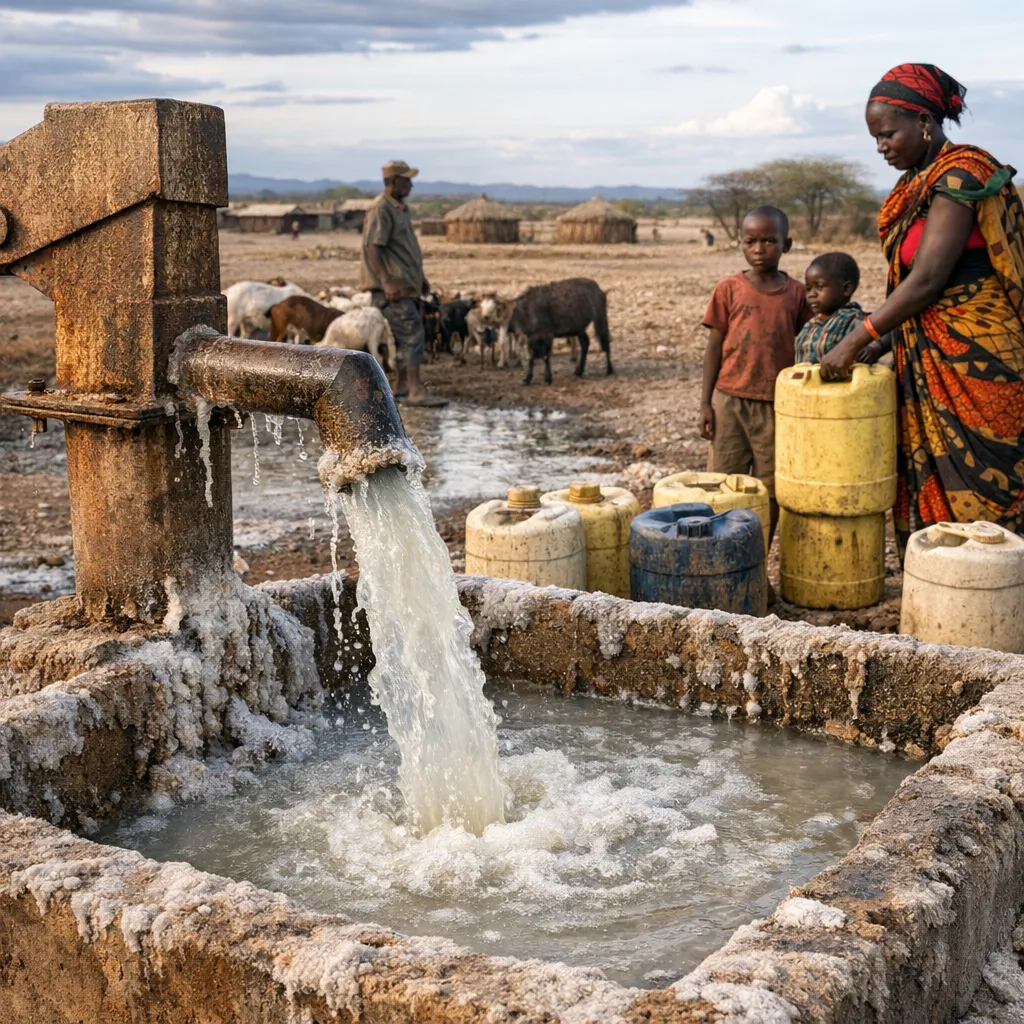
Across Kenya, borehole water quality varies significantly by location, geological formation, and drilling depth. While boreholes are a critical alternative water source for residential, commercial, and industrial users, many yield raw water that requires treatment before safe and effective use.
Based on field assessments and laboratory analysis conducted across multiple counties, many Kenyan boreholes commonly exhibit the following water quality challenges:
Common Borehole Water Quality Issues in Kenya
- High Total Dissolved Solids (TDS):
TDS levels ranging from 1,200 ppm to over 8,000 ppm are frequently recorded, especially in arid and semi-arid regions. Elevated TDS affects taste, accelerates corrosion, and limits suitability for sensitive applications. - Hardness (Calcium and Magnesium):
Excessive hardness leads to scale formation in pipes, boilers, and heat exchangers, increasing energy consumption and maintenance costs. - High Iron and Manganese Content:
Iron and manganese cause staining, discoloration, metallic taste, and fouling of plumbing fixtures and treatment equipment, particularly in hospitality and healthcare settings. - Fluoride Levels Above WHO Limits:
Many boreholes in Rift Valley and surrounding regions show fluoride concentrations exceeding WHO guidelines, posing long-term health risks if not treated. - High Silica Content:
Silica is a major contributor to membrane scaling in reverse osmosis (RO) systems, reducing efficiency and shortening equipment lifespan. - Salinity from Brackish Aquifers:
Boreholes tapping into brackish groundwater show elevated salinity, making water unsuitable for direct consumption or industrial processes without desalination.
Typical Borehole Water TDS Levels in Kenya
| Area | Common TDS Range (ppm) | Main Issue |
| Nairobi | 800 – 2,500 | Hardness, iron |
| Athi River | 2,000 – 5,000 | Salinity |
| Kajiado | 3,000 – 7,000 | Fluoride |
| Nakuru | 1,200 – 3,500 | Silica |
| Coastal regions | 5,000 – 10,000 | Seawater intrusion |
This is why borehole water treatment in Kenya almost always requires reverse osmosis.
What Is High TDS and Why It Matters for Industry in Kenya
Total Dissolved Solids (TDS) refers to the total concentration of dissolved salts, minerals, and inorganic matter present in water. In Kenya, especially where boreholes and groundwater sources are widely used, high TDS is a common and critical water quality challenge affecting industrial, commercial, and institutional operations.
TDS levels can vary widely depending on geology and aquifer conditions, with many boreholes in Kenya recording elevated TDS well above recommended limits for industrial and potable use.
Industrial Impacts of High TDS Water
High TDS water creates multiple operational and quality challenges, including:
- Scaling in boilers and heat exchangers
Dissolved salts precipitate under heat, forming scale that reduces heat transfer efficiency and increases fuel and energy consumption. - Corrosion of pipelines, pumps, and fittings
High salinity accelerates corrosion, leading to frequent leaks, equipment failure, and increased maintenance costs. - Unpleasant taste and odour in drinking water
Elevated TDS negatively affects water palatability, making it unsuitable for hotels, offices, and residential use without treatment. - Non-compliance with food, beverage, and pharmaceutical standards
Industries such as food processing, beverage bottling, and pharmaceuticals require low-TDS water to meet local and international quality standards, making untreated high-TDS water unacceptable. - Reduced lifespan of equipment and membranes
Continuous exposure to high TDS shortens the operational life of boilers, chillers, cooling towers, and treatment systems.
Reverse Osmosis: The Preferred Solution in Kenya
A Reverse Osmosis (RO) system is the most effective and widely adopted technology for managing high TDS water in Kenya. Properly designed RO systems can remove 95% to 99% of dissolved solids, producing high-quality water suitable for industrial, commercial, and potable applications.
Due to its reliability and efficiency, RO technology has become the preferred solution for reverse osmosis in Nairobi and across Kenya, particularly for:
- Hotels and hospitality facilities
- Hospitals and healthcare institutions
- Food and beverage industries
- Commercial buildings and data centres
- Industrial process and boiler feed water
When combined with appropriate pre-treatment and system design tailored to Kenyan water conditions, RO systems deliver consistent performance, regulatory compliance, and long-term cost savings.
High-TDS Borehole Water in Kenya: Industrial RO Plants That Reduce TDS from 100 LPH to 100 m³/hr
Kenya depends heavily on borehole water for industries, estates, hospitals, hotels, and manufacturing plants. In many regions like Nairobi, Athi River, Kiambu, Nakuru, Kajiado, and parts of Eastern Kenya, borehole water comes with high TDS (Total Dissolved Solids). This affects product quality, machinery life, and operating cost.
An industrial RO plant in Kenya is the most reliable solution to reduce high TDS and make borehole water usable for process, drinking, or reuse applications. This page explains how RO systems work, how to size them correctly from 100 LPH to 100 m³/hr, and how proper pre-treatment protects membranes and reduces long-term costs.
Borehole Water Quality Challenges in Kenya
Across Kenya, borehole water quality varies significantly by location, geological formation, and drilling depth. While boreholes are a critical alternative water source for residential, commercial, and industrial users, many yield raw water that requires treatment before safe and effective use.
Based on field assessments and laboratory analysis conducted across multiple counties, many Kenyan boreholes commonly exhibit the following water quality challenges:
Common Borehole Water Quality Issues in Kenya
- High Total Dissolved Solids (TDS):
TDS levels ranging from 1,200 ppm to over 8,000 ppm are frequently recorded, especially in arid and semi-arid regions. Elevated TDS affects taste, accelerates corrosion, and limits suitability for sensitive applications. - Hardness (Calcium and Magnesium):
Excessive hardness leads to scale formation in pipes, boilers, and heat exchangers, increasing energy consumption and maintenance costs. - High Iron and Manganese Content:
Iron and manganese cause staining, discoloration, metallic taste, and fouling of plumbing fixtures and treatment equipment, particularly in hospitality and healthcare settings. - Fluoride Levels Above WHO Limits:
Many boreholes in Rift Valley and surrounding regions show fluoride concentrations exceeding WHO guidelines, posing long-term health risks if not treated. - High Silica Content:
Silica is a major contributor to membrane scaling in reverse osmosis (RO) systems, reducing efficiency and shortening equipment lifespan. - Salinity from Brackish Aquifers:
Boreholes tapping into brackish groundwater show elevated salinity, making water unsuitable for direct consumption or industrial processes without desalination.
Typical Borehole Water TDS Levels in Kenya
| Area | Common TDS Range (ppm) | Main Issue |
| Nairobi | 800 – 2,500 | Hardness, iron |
| Athi River | 2,000 – 5,000 | Salinity |
| Kajiado | 3,000 – 7,000 | Fluoride |
| Nakuru | 1,200 – 3,500 | Silica |
| Coastal regions | 5,000 – 10,000 | Seawater intrusion |
This is why borehole water treatment in Kenya almost always requires reverse osmosis.
What Is High TDS and Why It Matters for Industry in Kenya
Total Dissolved Solids (TDS) refers to the total concentration of dissolved salts, minerals, and inorganic matter present in water. In Kenya, especially where boreholes and groundwater sources are widely used, high TDS is a common and critical water quality challenge affecting industrial, commercial, and institutional operations.
TDS levels can vary widely depending on geology and aquifer conditions, with many boreholes in Kenya recording elevated TDS well above recommended limits for industrial and potable use.
Industrial Impacts of High TDS Water
High TDS water creates multiple operational and quality challenges, including:
- Scaling in boilers and heat exchangers
Dissolved salts precipitate under heat, forming scale that reduces heat transfer efficiency and increases fuel and energy consumption. - Corrosion of pipelines, pumps, and fittings
High salinity accelerates corrosion, leading to frequent leaks, equipment failure, and increased maintenance costs. - Unpleasant taste and odour in drinking water
Elevated TDS negatively affects water palatability, making it unsuitable for hotels, offices, and residential use without treatment. - Non-compliance with food, beverage, and pharmaceutical standards
Industries such as food processing, beverage bottling, and pharmaceuticals require low-TDS water to meet local and international quality standards, making untreated high-TDS water unacceptable. - Reduced lifespan of equipment and membranes
Continuous exposure to high TDS shortens the operational life of boilers, chillers, cooling towers, and treatment systems.
Reverse Osmosis: The Preferred Solution in Kenya
A Reverse Osmosis (RO) system is the most effective and widely adopted technology for managing high TDS water in Kenya. Properly designed RO systems can remove 95% to 99% of dissolved solids, producing high-quality water suitable for industrial, commercial, and potable applications.
Due to its reliability and efficiency, RO technology has become the preferred solution for reverse osmosis in Nairobi and across Kenya, particularly for:
- Hotels and hospitality facilities
- Hospitals and healthcare institutions
- Food and beverage industries
- Commercial buildings and data centres
- Industrial process and boiler feed water
When combined with appropriate pre-treatment and system design tailored to Kenyan water conditions, RO systems deliver consistent performance, regulatory compliance, and long-term cost savings.
How Industrial RO Plants Reduce TDS Effectively in Kenya
Industrial Reverse Osmosis (RO) plants are the most reliable and widely used solution for reducing Total Dissolved Solids (TDS) in borehole and groundwater across Kenya. The technology is especially effective in regions where raw water contains high salinity, hardness, fluoride, or other dissolved minerals that make it unsuitable for direct industrial or potable use.
RO systems use semi-permeable membranes to separate purified water from dissolved salts, minerals, and other contaminants, producing consistent low-TDS output that meets industrial and drinking water standards.
RO Working Principle – Simple Explanation
The reverse osmosis process follows a clear and controlled sequence:
- Pre-treated borehole water enters the RO system
Raw water is first pre-treated to remove suspended solids, iron, and hardness, protecting the RO membranes from fouling and scaling. - High-pressure pumps force water through RO membranes
Pressure is applied to overcome natural osmotic pressure, allowing water molecules to pass while rejecting dissolved salts and minerals. - Pure water (permeate) passes through the membranes
This treated water has significantly reduced TDS and is suitable for industrial processes or potable applications after final conditioning. - Concentrated salts (reject) are flushed away
The rejected stream carries away dissolved solids, preventing their accumulation inside the system.
Reliable Performance for Continuous Operation
When correctly sized and professionally designed, an industrial RO plant can operate 24 hours a day, 7 days a week, delivering stable water quality and flow rates for many years. With proper pre-treatment, monitoring, and routine maintenance, RO systems offer long-term reliability, predictable operating costs, and consistent compliance with quality standards.
For industries, hotels, hospitals, and commercial facilities in Kenya, RO technology remains the preferred solution for high-TDS borehole water treatment.
RO Plant Capacity Range: 100 LPH to 100 m³/hr
Arnym Eco Green designs RO plants for small users and large industries.
Common RO Plant Sizes in Kenya
| Capacity | Application |
| 100–250 LPH | Clinics, offices, small shops |
| 500–1,000 LPH | Restaurants, apartments |
| 2–5 m³/hr | Hotels, schools |
| 10–25 m³/hr | Factories, estates |
| 50–100 m³/hr | Industrial parks, utilities |
For large users, a RO plant 100 m³ per hour requires strong pretreatment and membrane protection design.
How to Size an Industrial RO Plant Correctly
Correct sizing avoids membrane damage, low recovery, and high running costs.
Key Inputs Required for RO Sizing
- Borehole water analysis (full lab report)
- Required treated water flow (LPH or m³/hr)
- Required output TDS
- Daily operating hours
- Space and power availability
Example Sizing Calculation
If a factory needs:
- 20 m³/hr treated water
- Borehole TDS = 3,500 ppm
- 20 hours/day operation
Recommended design:
- Feed flow ≈ 30–35 m³/hr
- Recovery ≈ 65%
- Two-stage RO with antiscalant dosing
This protects membranes and ensures stable output.
Pre-Treatment: The Most Important Part of RO Success
Over 70% of RO failures in Kenya are caused by poor pre-treatment.
Why Pre-Treatment Is Critical
Pre-treatment removes contaminants that damage RO membranes, such as iron, silt, hardness, and organics.
Standard Pre-Treatment for Borehole Water
- Raw water storage tank
- Multi-grade sand filter
- Activated carbon filter
- Iron removal system (if required)
- Water softener (for hardness control)
- Micron cartridge filters
Only after this does water enter the RO membranes.
Membrane Scaling Control and Protection
Membrane scaling control is essential for high-TDS RO systems.
Common Scaling Elements in Kenyan Boreholes
- Calcium carbonate
- Calcium sulphate
- Silica
- Iron fouling
Protection Methods Used
- Proper recovery design
- Antiscalant dosing system
- Controlled pH
- Periodic CIP (clean-in-place)
Arnym Eco Green designs RO systems with long membrane life, even in tough Kenyan borehole conditions.
Industrial RO System Design Options
Single Pass RO
- Suitable for moderate TDS
- Lower capital cost
- Used for utilities and general process water
Double Pass RO
- Very low TDS output
- Used in pharmaceuticals, electronics
- Higher purity requirement
Brackish Water RO
- Designed for TDS 2,000–10,000 ppm
- Heavy-duty membranes
- Strong pretreatment
Energy and Operating Cost Considerations
Power cost matters in Kenya.
Factors Affecting RO Running Cost
- Feed water TDS
- Pump efficiency
- Recovery percentage
- Chemical consumption
- Membrane life
A properly designed RO plant reduces:
- Electricity cost
- Chemical usage
- Downtime
Two Detailed Success Stories from Kenya
Success Story 1: Manufacturing Plant in Athi River
Problem
A manufacturing plant in Athi River had borehole water with:
- TDS: 4,800 ppm
- High hardness and iron
They faced:
- Frequent boiler scaling
- Production stoppages
- High chemical usage
Solution Implemented
- 25 m³/hr industrial RO plant
- Complete pretreatment including iron removal
- Two-stage RO with antiscalant system
Results
- Output TDS reduced to <120 ppm
- Boiler downtime reduced by 90%
- Membrane life exceeded 3 years
- Water reuse increased significantly
This project showed the importance of correct borehole water treatment Kenya practices.
Success Story 2: Residential Estate near Nairobi
Problem
A large residential estate relied on borehole water with:
- TDS: 2,200 ppm
- Poor taste and scaling in plumbing
Residents complained about water quality and appliance damage.
Solution Implemented
- 10 m³/hr RO system
- Softener + carbon filtration
- Automatic flushing and CIP design
Results
- Drinking water TDS <150 ppm
- Improved taste and clarity
- Reduced pipe and heater failures
- Stable 24/7 water supply
This proved that RO is not only for factories but also for estates.
RO Automation and Monitoring
Modern RO plants supplied by Arnym Eco Green include:
- PLC-based control panels
- Online TDS and pressure monitoring
- Auto-flush and safety interlocks
- Low maintenance operation
Automation reduces operator error and protects membranes.
RO Reject Water Management in Kenya
RO reject water can be reused for:
- Gardening
- Toilet flushing
- Cooling towers
- Construction
Proper reject management reduces water wastage and operating cost.
Applications of Industrial RO Plants in Kenya
- Food & beverage factories
- Pharmaceutical units
- Hospitals and dialysis centers
- Hotels and resorts
- Bottled water plants
- Textile and chemical industries
Why Choose Arnym Eco Green Pvt. Ltd
Arnym Eco Green Pvt. Ltd brings global RO expertise adapted to Kenyan conditions.
Key Reasons Industries Trust Arnym
- Proven experience with industrial RO plant Kenya projects
- Designs based on real borehole water analysis
- Strong focus on membrane protection
- Scalable systems from 100 LPH to 100 m³/hr
- Energy-efficient and low maintenance designs
- Long-term technical support
We do not sell standard machines. We engineer solutions.
Watertech Kenya 2026 – Water Technology Trade Exhibition
Water challenges are growing in Kenya. Watertech Kenya 2026 – Water Technology Trade Exhibition will bring together industries, consultants, and technology providers.
Industrial RO systems, high-TDS solutions, and borehole treatment technologies will be key focus areas. This event highlights the growing demand for reliable reverse osmosis Nairobi solutions and large-capacity RO plants.
RO Plant Capacity Range: 100 LPH to 100 m³/hr
Arnym Eco Green designs RO plants for small users and large industries.
Common RO Plant Sizes in Kenya
| Capacity | Application |
| 100–250 LPH | Clinics, offices, small shops |
| 500–1,000 LPH | Restaurants, apartments |
| 2–5 m³/hr | Hotels, schools |
| 10–25 m³/hr | Factories, estates |
| 50–100 m³/hr | Industrial parks, utilities |
For large users, a RO plant 100 m³ per hour requires strong pretreatment and membrane protection design.
How to Size an Industrial RO Plant Correctly
Correct sizing avoids membrane damage, low recovery, and high running costs.
Key Inputs Required for RO Sizing
- Borehole water analysis (full lab report)
- Required treated water flow (LPH or m³/hr)
- Required output TDS
- Daily operating hours
- Space and power availability
Example Sizing Calculation
If a factory needs:
- 20 m³/hr treated water
- Borehole TDS = 3,500 ppm
- 20 hours/day operation
Recommended design:
- Feed flow ≈ 30–35 m³/hr
- Recovery ≈ 65%
- Two-stage RO with antiscalant dosing
This protects membranes and ensures stable output.
Pre-Treatment: The Most Important Part of RO Success
Over 70% of RO failures in Kenya are caused by poor pre-treatment.
Why Pre-Treatment Is Critical
Pre-treatment removes contaminants that damage RO membranes, such as iron, silt, hardness, and organics.
Standard Pre-Treatment for Borehole Water
- Raw water storage tank
- Multi-grade sand filter
- Activated carbon filter
- Iron removal system (if required)
- Water softener (for hardness control)
- Micron cartridge filters
Only after this does water enter the RO membranes.
Membrane Scaling Control and Protection
Membrane scaling control is essential for high-TDS RO systems.
Common Scaling Elements in Kenyan Boreholes
- Calcium carbonate
- Calcium sulphate
- Silica
- Iron fouling
Protection Methods Used
- Proper recovery desig
- Antiscalant dosing system
- Controlled p
- Periodic CIP (clean-in-place)
Arnym Eco Green designs RO systems with long membrane life, even in tough Kenyan borehole conditions.
Industrial RO System Design Options
Single Pass RO
- Suitable for moderate TDS
- Lower capital cost
- Used for utilities and general process water
Double Pass RO
- Very low TDS output
- Used in pharmaceuticals, electronics
- Higher purity requirement
Brackish Water RO
- Designed for TDS 2,000–10,000 ppm
- Heavy-duty membranes
- Strong pretreatment
Energy and Operating Cost Considerations
Power cost matters in Kenya.
Factors Affecting RO Running Cost
- Feed water TDS
- Pump efficiency
- Recovery percentage
- Chemical consumption
- Membrane life
A properly designed RO plant reduces:
- Electricity cost
- Chemical usage
- Downtime
Two Detailed Success Stories from Kenya
Success Story 1: Manufacturing Plant in Athi River
Problem
A manufacturing plant in Athi River had borehole water with:
- TDS: 4,800 ppm
- High hardness and iron
They faced:
- Frequent boiler scaling
- Production stoppages
- High chemical usage
Solution Implemented
- 25 m³/hr industrial RO plant
- Complete pretreatment including iron removal
- Two-stage RO with antiscalant system
Results
- Output TDS reduced to <120 ppm
- Boiler downtime reduced by 90%
- Membrane life exceeded 3 years
- Water reuse increased significantly
This project showed the importance of correct borehole water treatment Kenya practices.
Success Story 2: Residential Estate near Nairobi
Problem
A large residential estate relied on borehole water with:
- TDS: 2,200 ppm
- Poor taste and scaling in plumbing
Residents complained about water quality and appliance damage.
Solution Implemented
- 10 m³/hr RO system
- Softener + carbon filtration
- Automatic flushing and CIP design
Results
- Drinking water TDS <150 ppm
- Improved taste and clarity
- Reduced pipe and heater failures
- Stable 24/7 water supply
This proved that RO is not only for factories but also for estates.
RO Automation and Monitoring
Modern RO plants supplied by Arnym Eco Green include:
- PLC-based control panels
- Online TDS and pressure monitoring
- Auto-flush and safety interlocks
- Low maintenance operation
Automation reduces operator error and protects membranes. High TDS Borehole Water in Kenya
RO Reject Water Management in Kenya
RO reject water can be reused for:
- Gardening
- Toilet flushing
- Cooling towers
- Construction
Proper reject management reduces water wastage and operating cost.
Applications of Industrial RO Plants in Kenya
- Food & beverage factories
- Pharmaceutical units
- Hospitals and dialysis centers
- Hotels and resorts
- Bottled water plants
- Textile and chemical industries
Why Choose Arnym Eco Green Pvt. Ltd
Arnym Eco Green Pvt. Ltd brings global RO expertise adapted to Kenyan conditions.
Key Reasons Industries Trust Arnym
- Proven experience with industrial RO plant Kenya projects
- Designs based on real borehole water analysis
- Strong focus on membrane protection
- Scalable systems from 100 LPH to 100 m³/hr
- Energy-efficient and low maintenance designs
- Long-term technical support
We do not sell standard machines. We engineer solutions.
Watertech Kenya 2026 – Water Technology Trade Exhibition
Water challenges are growing in Kenya. Watertech Kenya 2026 – Water Technology Trade Exhibition will bring together industries, consultants, and technology providers.
Industrial RO systems, high-TDS solutions, and borehole treatment technologies will be key focus areas. This event highlights the growing demand for reliable reverse osmosis Nairobi solutions and large-capacity RO plants.
High TDS Borehole Water in Kenya
🌊 Ensure Kenya Water Quality Regulations 2024 Compliance Now! ⚖️
Industries: Upgrade your ETP/STP, secure Effluent Discharge Licence, and ace the Compliance Checklist with Arny Mecogreen’s expert wastewater solutions!
📍 Pune, India HQ: Arnym Eco Green Pvt. Ltd. Eleven West Tower, Level 2, Pan Card Club Road, Baner, Pune, Maharashtra 411045 India
Other: +91 20 67872229 | +91 85305 55605
Connect on Social:
Related Water Treatment Resources
- Wastewater in Kenya
- Wastewater Projects in Kenya
- CETP Model for Kenya
- Food and Beverage Wastewater in Kenya
- High TDS Borehole Water in Kenya
- Greywater Recycling
- MBR vs MBBR vs SAFF vs FAB for Kenya
- Water Reuse in Kenya
- Consent to Discharge into Sewer
- Kenya Water Quality Regulations 2024
- Water Treatment Chemicals
- Water Treatment Services in Indonesia
- Water Treatment Services in Malaysia
- Water Treatment Services in Vietnam
- Water Treatment Services in Thailand
- Water Treatment Companies in Philippines
- Top Water Treatment Services in Philippines
- Challenges Facing the Water Industry
- Calculate Your Savings Every Month
- Water Technologies
- Water Treatment Solutions
- RO Plant
- Mineral Water Plant
- UF System
- UV Plant
- Water Softner
- DM Plant
- Fully Automatic Water Filtration System
- Turnkey Project for Drinking Water
- Spares Consumables
- Waste Water Technologies
- Sewage Treatment Plant
- Effluent Treatment Plant
- Common Effluent Treatment Plant
- Grey Water Management