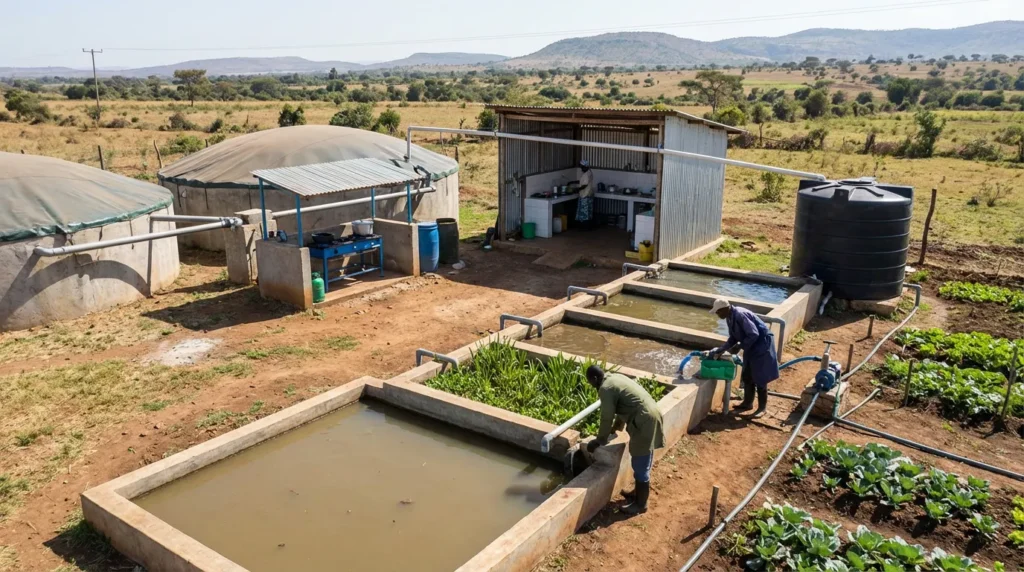
Water Reuse in Kenya’s Industrial Parks & SEZs: Why Naivasha SEZ’s Bulk Water + Wastewater PPP Signals the Next Big Wave
Kenya’s industrial growth ambitions are increasingly constrained by one critical factor: water security. As Special Economic Zones (SEZs) and industrial parks expand to attract manufacturing, agro-processing, pharmaceuticals, textiles, and data-driven industries, reliable water supply and compliant wastewater management have become decisive investment considerations.
The Naivasha SEZ water project—structured around an integrated bulk water supply and wastewater treatment Public–Private Partnership (PPP)—marks a fundamental shift in how industrial water infrastructure is planned and delivered in Kenya. More importantly, it highlights why wastewater treatment and reuse is becoming non-negotiable for competitive, resilient SEZs.
Using Naivasha SEZ as the central case study, this article examines how industrial water reliability, centralized wastewater treatment, and reuse economics are reshaping Kenya’s SEZ landscape, while outlining opportunities for developers, investors, operators, and solution providers.
Kenya’s Industrial Water Challenge: Why Water Security Is Now a Strategic Risk for SEZs and Industrial Parks
Growing Pressure on Freshwater Resources in Kenya
Kenya is officially classified as a water-scarce country, with per capita renewable freshwater availability well below the international water stress threshold of 1,000 m³ per person per year. Current estimates place Kenya closer to 400–500 m³ per capita, and this figure continues to decline due to a convergence of structural and climate-related factors.
Rapid population growth, accelerating urbanisation, and expanding economic activity have significantly increased demand for freshwater resources. Agriculture remains the dominant consumer, accounting for over 70% of national water abstractions, while urban domestic use, energy generation, and industrial demand are growing at a much faster rate. Climate variability, prolonged drought cycles, and declining catchment integrity further constrain reliable surface and groundwater availability.
For industrial users, this context translates into intensifying competition for water allocations, stricter abstraction licensing by the Water Resources Authority (WRA), and rising exposure to seasonal shortages. In many regions, particularly Athi River, Naivasha, Thika, Mombasa hinterland, and emerging SEZ corridors, groundwater levels are falling and surface water sources are increasingly over-allocated.
As Kenya advances its manufacturing-led growth agenda under Vision 2030 and the Bottom-Up Economic Transformation Agenda (BETA), the tension between industrial expansion and water security is becoming more pronounced.
Why Special Economic Zones (SEZs) and Industrial Parks Are Most Exposed
Special Economic Zones and industrial parks represent high-density, high-intensity water demand nodes. Unlike dispersed industrial developments, SEZs concentrate multiple water-dependent processes within a confined geographic footprint. These include:
- Process water for manufacturing lines
- Cooling water for power and thermal systems
- Boiler feed water
- Cleaning, washing, and sanitation
- Fire protection and utility services
Many priority sectors promoted within Kenyan SEZs—such as textiles and apparel, agro-processing, food and beverage, pharmaceuticals, chemicals, and metal processing—are inherently water-intensive and generate complex wastewater streams.
Even short-term water supply disruptions can lead to:
- Production shutdowns and batch losses
- Equipment damage
- Breach of supply contracts
- Export delays and penalties
- Reputational damage with global buyers
From a Kenyan wastewater infrastructure perspective, the challenge is compounded by the way many existing industrial parks were historically developed. Numerous parks rely on fragmented boreholes, ad hoc water trucking during shortages, and tenant-level effluent treatment plants (ETPs) with limited oversight and inconsistent performance.
As zones scale, this decentralised approach becomes:
- Technically inefficient
- Capital-intensive for tenants
- Difficult to regulate and monitor
- Environmentally high-risk
Non-compliant effluent discharge poses serious threats to rivers, aquifers, and downstream communities, increasing the likelihood of regulatory enforcement actions by NEMA and county authorities.
Water Reliability as a Critical Investment and ESG Risk
For infrastructure investors, developers, and anchor tenants, water risk has emerged as a core investment consideration, on par with power reliability, transport connectivity, and regulatory stability.
Inadequate bulk water supply and wastewater planning can directly impact:
- Project bankability and financial close
- Debt pricing and lender risk perception
- Tenant attraction and retention
- Long-term asset valuation
- Compliance with international ESG and sustainability frameworks
Global investors and multinational tenants increasingly apply stringent water stewardship and ESG due diligence criteria. Industrial assets without credible water security strategies face reduced competitiveness in attracting high-quality tenants, particularly export-oriented manufacturers supplying European and North American markets.
From an ESG standpoint, unmanaged water abstraction, poor wastewater treatment, and pollution risks undermine:
- Environmental compliance
- Social licence to operate
- Community relations
- Climate resilience credentials
In Kenya’s regulatory environment, water-related non-compliance can result in abstraction permit suspensions, effluent discharge penalties, operational shutdowns, and prolonged legal disputes—outcomes that materially affect cash flows and investor confidence.
The Shift Toward Integrated Bulk Water and SEZ Wastewater Systems
As a result of these pressures, integrated bulk water supply and centralised wastewater treatment systems are no longer optional amenities. They are becoming foundational infrastructure for modern SEZs and industrial parks in Kenya.
Well-planned systems typically include:
- Diversified water sources (surface water, groundwater, reclaimed water)
- Centralised abstraction and treatment facilities
- High-efficiency distribution networks
- Zone-wide wastewater collection and treatment plants
- Treated effluent reuse for cooling, landscaping, and non-potable applications
From a Kenyan wastewater expert’s perspective, centralised systems offer:
- Economies of scale and lower unit costs
- Improved regulatory compliance and monitoring
- Higher treatment performance and environmental protection
- Enhanced drought resilience through reuse and recycling
- Stronger ESG positioning for investors and tenants
Critically, integrated water infrastructure enables predictable, contractable water supply, reducing operational uncertainty and supporting long-term industrial planning.
Water Security as a Cornerstone of Industrial Competitiveness in Kenya
Kenya’s industrialisation ambitions cannot be realised without addressing water scarcity and wastewater management at a strategic level. For SEZs and industrial parks, water reliability is no longer a background utility issue—it is a determinant of competitiveness, resilience, and investment success.
Developers, policymakers, and investors who proactively embed integrated bulk water and wastewater solutions into industrial zone planning will be better positioned to:
- Mitigate climate and regulatory risks
- Attract high-value manufacturing tenants
- Protect environmental and community resources
- Safeguard long-term asset value
In a water-stressed economy like Kenya, industrial water security is economic security.
What Makes Naivasha SEZ Different
Integrated Water and Wastewater Infrastructure at Naivasha SEZ
The Naivasha Special Economic Zone (SEZ) stands out as a benchmark for industrial water infrastructure in Kenya due to its fully integrated approach to bulk water supply and wastewater management. Unlike conventional developments where water supply and sewerage systems are planned and operated independently, the Naivasha SEZ water project has been designed as a single, closed-loop system.
Located within the water-stressed Naivasha basin—an area characterised by competing agricultural, ecological, and industrial water demands—the SEZ adopts a model that prioritises efficiency, sustainability, and long-term resilience. Centralised bulk water treatment facilities supply the entire zone through a unified distribution network, while a zone-wide sewerage system collects, treats, and enables reuse of wastewater generated by industrial tenants.
This integrated infrastructure approach ensures that water availability does not become a constraint to industrial growth, while simultaneously protecting Lake Naivasha and surrounding ecosystems.
Overview of the Naivasha SEZ Water Project
The Naivasha SEZ water project is structured around three core components:
- Centralised bulk water abstraction and treatment
- Zone-wide potable and process water distribution
- Centralised wastewater collection, treatment, and reuse
By planning water and wastewater systems together, the SEZ acknowledges a fundamental principle of industrial water management: every cubic metre of water supplied ultimately returns to the system as wastewater. Rather than treating this as a disposal challenge, the Naivasha model treats wastewater as a strategic resource.
Treated effluent is reused for non-potable industrial applications, landscaping, and other approved uses, significantly reducing the SEZ’s dependence on freshwater abstraction. This is particularly critical in Naivasha, where sustainable water allocation is a regulatory and environmental priority.
Why Bulk Water and Wastewater Integration Matters
In many industrial developments across Kenya and the region, water supply and wastewater management are implemented in silos—often by different entities, under different regulatory frameworks. This separation leads to inefficiencies, higher operating costs, and increased environmental risk.
The Naivasha SEZ model recognises the direct linkage between water supply and wastewater generation. Integrating these systems delivers several key advantages:
- Reduced freshwater demand through systematic wastewater reuse
- Lower lifecycle costs by optimising infrastructure sizing and operations
- Improved regulatory compliance with NEMA discharge standards and water abstraction permits
- Enhanced environmental protection, particularly for Lake Naivasha and downstream users
From a wastewater specialist’s perspective, integration also allows for better influent quality control, predictable hydraulic and organic loading, and more stable wastewater treatment plant performance—critical factors for long-term operational reliability.
Role of Public–Private Partnership (PPP) Structures
The Naivasha SEZ water and wastewater infrastructure is being delivered through a Kenyan water PPP framework, combining public sector oversight with private sector financing, engineering expertise, and operational capability.
PPP structures play a critical role in enabling large-scale, capital-intensive water infrastructure by:
- Mobilising private capital for high-CAPEX treatment and distribution assets
- Transferring construction, technology, and operational risk to experienced water operators
- Ensuring performance-based service delivery through long-term contractual obligations
- Supporting tariff stability and predictability for industrial tenants
For Naivasha SEZ, this PPP model ensures that water and wastewater services are reliable, professionally managed, and aligned with international industrial standards, while remaining compliant with Kenyan water sector regulations.
A Scalable Model for Industrial Water Management in Kenya
The Naivasha SEZ water project demonstrates how integrated water and wastewater planning—supported by robust PPP structures—can unlock sustainable industrial development in water-constrained regions of Kenya. By treating wastewater as a recoverable resource and embedding reuse into the system design, the SEZ sets a precedent for future industrial parks, export processing zones, and economic corridors across the country.
From a Kenyan wastewater engineering perspective, Naivasha represents not just infrastructure, but a shift in how industrial water systems should be conceived, financed, and operated for long-term resilience.
Inside the Naivasha Bulk Water and Wastewater PPP Model
Project Concept and Scope
The Naivasha Bulk Water and Wastewater Public–Private Partnership (PPP) is a flagship infrastructure model designed to support sustainable industrialization within the Naivasha Special Economic Zone (SEZ). The project responds directly to the region’s water stress, regulatory requirements under Kenyan environmental law, and the increasing demand for reliable industrial water services.
At its core, the Naivasha SEZ water model integrates three interlinked systems:
- Bulk raw water abstraction and treatment
- Industrial-grade water distribution
- Centralized wastewater collection, treatment, and reuse
These systems are deliberately designed as modular and scalable, enabling capacity expansion in line with phased SEZ development while avoiding stranded infrastructure or inefficient capital deployment.
From a Kenyan water sector perspective, this integrated approach aligns with national priorities under the Water Act 2016, Vision 2030, and emerging circular economy principles promoted by regulators such as WASREB, NEMA, and WRMA/WRA.
Centralized Intake, Treatment, and Distribution Infrastructure
Unlike conventional industrial parks that depend on multiple boreholes or isolated tenant-owned treatment plants, the Naivasha Bulk Water PPP adopts a centralized abstraction and treatment strategy.
Raw water is abstracted from approved sources under Water Resources Authority (WRA) permits and treated at a single, professionally managed water treatment plant. The treated water is then distributed through a dedicated bulk network to SEZ tenants at industrial-grade quality standards.
This centralized model delivers several strategic advantages:
- Consistent and compliant water quality, critical for export-oriented manufacturing and agro-processing
- Lower unit treatment costs achieved through economies of scale
- Reduced groundwater over-abstraction, a key concern in the Naivasha basin
- Simplified regulatory oversight, with fewer abstraction points and clearer accountability
For investors and operators, this approach significantly reduces operational risk, capital duplication, and compliance complexity—factors that have historically constrained industrial growth in water-stressed regions of Kenya.
Centralized Wastewater Treatment and Reuse Loop
A defining feature of the Naivasha SEZ model is its integrated wastewater management and reuse system, designed to treat wastewater not as waste, but as a recoverable resource.
All industrial effluent generated within the zone is collected through a centralized sewer network and conveyed to a central wastewater treatment facility. The plant is engineered to handle diverse industrial effluent streams and achieve treatment standards aligned with NEMA discharge regulations and reuse requirements.
Key elements of the wastewater loop include:
- Pre-treatment controls at tenant level to protect the central system
- Advanced biological and tertiary treatment processes
- Quality monitoring and compliance reporting
- Reuse-ready treated effluent
Treated wastewater is reused for non-potable industrial applications, including cooling systems, process water, utilities, landscaping, and other suitable uses. This significantly reduces demand for freshwater abstraction and enhances long-term water security for the SEZ.
Why the Naivasha Model Is Transformational for Kenya
From a national wastewater and industrial infrastructure perspective, the Naivasha Bulk Water and Wastewater PPP represents a paradigm shift in how Kenya approaches industrial water management.
First, it demonstrates that wastewater treatment and reuse can be implemented at scale within Special Economic Zones, rather than as isolated pilot projects. Second, it reframes wastewater from a regulatory burden into a strategic industrial asset that supports resilience, cost control, and environmental stewardship.
Critically, the model:
- Reduces freshwater allocation risk in a water-scarce catchment
- Improves investor confidence through predictable utility services
- Supports ESG and sustainability commitments
- Creates a replicable blueprint for future SEZs and industrial parks across Kenya
As Kenya accelerates industrialization while facing tightening water constraints, the Naivasha SEZ bulk water and wastewater PPP provides a practical, bankable, and policy-aligned solution—one that balances economic growth with environmental sustainability.
Economics of Wastewater Treatment and Reuse in Special Economic Zones (SEZs)
Freshwater Supply Versus Wastewater Reuse Economics
In Kenya’s water-stressed basins, including Naivasha and other emerging industrial corridors, the economics of wastewater treatment and reuse increasingly outperform traditional freshwater-only supply models. While reuse-integrated SEZs require higher upfront capital investment, the long-term financial, operational, and risk-adjusted returns are significantly superior.
Freshwater-dependent SEZs are exposed to escalating abstraction costs, regulatory tightening by the Water Resources Authority (WRA), climate-driven variability, and competition with domestic and agricultural users. In contrast, reuse-integrated SEZs internalise water security through circular water systems, reducing dependence on increasingly constrained freshwater sources.
From a lifecycle cost perspective, wastewater reuse shifts water from a volatile external input into a controlled and predictable internal resource.
Cost and Benefit Comparison: Conventional vs Reuse-Integrated SEZs
Water Supply Risk
Freshwater-only SEZs face high supply risk due to drought, abstraction caps, and catchment-level restrictions. Reuse-integrated SEZs significantly reduce this exposure by recycling treated effluent, ensuring continuity of supply even during periods of hydrological stress.
Long-Term Water Cost Trajectory
Freshwater tariffs in Kenya are structurally rising due to scarcity pricing, energy costs, and regulatory compliance. In reuse-integrated SEZs, water costs are stabilised over time as treated wastewater offsets raw water demand, dampening tariff volatility.
Wastewater Compliance Costs
Fragmented tenant-level wastewater treatment results in duplicated CAPEX, inconsistent compliance, and high cumulative OPEX. Centralised wastewater treatment plants achieve economies of scale, optimised process control, and lower per-unit compliance costs, while simplifying engagement with NEMA and county authorities.
ESG Attractiveness
Conventional SEZs offer moderate ESG alignment at best, often limited by high freshwater consumption and discharge risks. Reuse-centric SEZs demonstrate strong performance in water stewardship, pollution prevention, and climate resilience—key metrics for ESG-driven investors.
Investor Confidence
Where water security is uncertain, investor confidence remains conditional. In reuse-integrated SEZs, reliable utility services underpin stronger, more bankable investment decisions and longer-term tenant commitments.
CAPEX and OPEX Trade-Offs in Centralised Wastewater Systems
Centralised wastewater treatment infrastructure fundamentally reshapes the cost structure of industrial zones. Instead of multiple tenants each investing in individual treatment plants, costs are pooled into a shared, professionally operated system under a PPP or utility-style framework.
While upfront CAPEX is higher at the SEZ level, total system-wide costs are lower over time due to:
- Reduced duplication of infrastructure
- Optimised energy and chemical use
- Professional operations and maintenance
- Predictable asset management and lifecycle planning
This model lowers OPEX per tenant, improves service reliability, and enables transparent, long-term tariff structures that are easier for investors and operators to price into their business models.
Impact on Industrial Tenant Operating Costs
For industrial tenants, centralized wastewater treatment and reuse deliver tangible commercial benefits:
- Lower regulatory compliance burden and reduced risk of non-compliance penalties
- Elimination of individual wastewater treatment CAPEX
- Reduced operational complexity and management overhead
- Access to stable, non-potable water supplies at predictable tariffs
These factors improve operating margins, particularly for water-intensive sectors such as agro-processing, textiles, pharmaceuticals, and manufacturing.
ESG and Investor Considerations in Reuse-Centric SEZs
Globally, capital allocation is increasingly influenced by environmental, social, and governance (ESG) performance. Reuse-integrated SEZs in Kenya align strongly with:
- Water stewardship and circular economy principles
- Climate adaptation and resilience strategies
- Responsible resource management benchmarks
- International development finance and ESG screening criteria
For development finance institutions (DFIs), private equity funds, and multinational tenants, wastewater reuse is no longer a sustainability add-on—it is a core investment risk mitigant.
Strategic Implications for Kenya’s Industrial Development
As Kenya expands its SEZ programme under Vision 2030, wastewater treatment and reuse economics will increasingly determine project viability and investor appeal. SEZs that embed circular water systems from the outset will enjoy lower long-term costs, stronger regulatory alignment, and superior resilience, positioning them as preferred destinations for global industrial capital.
Wastewater Treatment and Reuse Technologies for SEZ-Scale Developments
Centralised Effluent Treatment Plants (ETPs) for SEZs
At Special Economic Zone (SEZ) scale, wastewater management requires centralised effluent treatment plants (ETPs) capable of handling variable flows and diverse industrial effluent characteristics. In the Kenyan context—where SEZs host mixed-use manufacturing, agro-processing, logistics, and light industry—ETPs must be robust, flexible, and regulator-ready.
SEZ-scale ETPs are therefore designed using modular treatment trains, allowing the system to adapt as tenant profiles evolve over time. This approach enables the addition or upgrading of unit processes without major disruption, ensuring long-term operational resilience.
Typical design considerations include:
- Influent variability in organic load, nutrients, and industrial contaminants
- Phased capacity expansion aligned to SEZ development stages
- Compliance with NEMA effluent discharge and reuse standards
- Protection of downstream reuse infrastructure
Centralisation improves treatment efficiency, simplifies compliance management, and achieves economies of scale that are not possible with fragmented, tenant-level systems.
Tertiary Treatment Technologies and Reuse Applications
To enable meaningful wastewater reuse within SEZs, secondary treatment alone is insufficient. Tertiary and advanced treatment technologies are required to produce water that is fit-for-purpose across a range of industrial and utility applications.
Different treatment combinations support multiple reuse pathways:
Biological Treatment and Filtration
Conventional biological treatment, followed by sand or multimedia filtration, produces treated effluent suitable for:
- Utility water
- Equipment and floor washing
- General industrial non-potable uses
This represents the most cost-effective reuse option and forms the backbone of most SEZ reuse systems.
Membrane Bioreactor (MBR) Systems
For higher-quality reuse requirements, membrane bioreactor (MBR) technology integrates biological treatment with membrane filtration, delivering low turbidity and high microbiological removal.
MBR-treated water is suitable for:
- Industrial process water
- Cooling towers and heat exchange systems
- High-reliability manufacturing applications
In Kenyan SEZs targeting export-oriented or water-intensive industries, MBR systems significantly enhance water security and operational reliability.
Advanced Disinfection Technologies
For applications where public exposure or system safety is a concern, advanced disinfection—such as ultraviolet (UV) or chlorination—ensures pathogen control and regulatory compliance.
Disinfected reclaimed water is commonly reused for:
- Landscaping and green buffer irrigation
- Fire protection and emergency systems
- Dust suppression and site services
These reuse pathways reduce freshwater demand while maintaining public health safeguards.
Automation, Monitoring, and Regulatory Compliance
Modern SEZ wastewater treatment and reuse systems rely heavily on automation and digital monitoring to ensure consistent performance and regulatory adherence.
Key elements include:
- Real-time monitoring of influent and effluent quality parameters
- Automated process control to manage load variability
- Digital compliance reporting aligned with NEMA and county authority requirements
- Alarm systems and redundancy to protect reuse water quality
Automation reduces human error, improves treatment stability, and provides auditable data trails—an increasingly important requirement for ESG-aligned investors and regulators.
Freshwater Resources in Kenya
Scalability Through Modular Design
Scalability is a critical design principle for SEZ wastewater infrastructure in Kenya. Industrial zones rarely reach full occupancy at inception, making oversized treatment plants financially inefficient.
Modular wastewater treatment design allows:
- Incremental capacity expansion as tenant demand grows
- Capital expenditure to be phased over time
- Minimal disruption to existing operations during upgrades
- Long-term adaptability to changing industrial profiles
This approach ensures that wastewater treatment and reuse infrastructure remains aligned with actual SEZ growth, supporting both financial sustainability and operational continuity.
Water Reuse in Kenya (Nairobi)
Strategic Value of Technology Selection in Kenyan SEZs
The selection of appropriate wastewater treatment and reuse technologies directly influences SEZ bankability, regulatory compliance, and long-term resilience. Well-designed, centralised, and modular systems enable SEZs to move beyond basic compliance toward integrated water resource management—a necessity in Kenya’s increasingly water-constrained industrial landscape.
Replicability of Reuse-Centric Wastewater Models Across Kenya’s SEZs
Applicability to Other Industrial Zones in Kenya
The Naivasha Bulk Water and Wastewater PPP model provides a scalable and transferable blueprint for industrial water and wastewater management across Kenya’s rapidly expanding Special Economic Zones (SEZs) and industrial parks.
The underlying principles—centralised treatment, wastewater reuse, modular design, and professional utility-style operation—are not site-specific. They are directly applicable to other major industrial developments, including:
- Konza Technopolis, where high-tech and data-driven industries require reliable, high-quality utility services
- Dongo Kundu Special Economic Zone, which faces coastal water scarcity and environmental sensitivity
- Tatu City, a large mixed-use industrial and commercial development with long-term water demand growth
- The Athi River industrial corridor, characterised by legacy pollution challenges and fragmented wastewater management
- Mombasa-based SEZs, where saline intrusion and limited freshwater availability heighten the need for reuse
In each of these locations, centralised wastewater treatment and reuse can reduce dependence on overstretched surface and groundwater resources while supporting industrial expansion.
Regulatory and Water Allocation Implications
Kenya’s water and environmental regulators are increasingly prioritising developments that demonstrate responsible water resource management. From a wastewater expert perspective, approval pathways are becoming more favourable for SEZs that incorporate reuse-centric designs from inception.
Key regulatory trends include:
- Greater scrutiny of freshwater abstraction licences issued by the Water Resources Authority (WRA)
- Stronger enforcement of NEMA effluent discharge standards
- Increased emphasis on water reuse commitments in Environmental and Social Impact Assessments (ESIAs)
- Preference for centralised wastewater compliance frameworks over fragmented tenant-level systems
SEZs that integrate wastewater reuse reduce pressure on shared catchments, simplify regulatory oversight, and demonstrate alignment with national water security objectives under Vision 2030 and climate resilience strategies.
Why Reuse-Centric SEZs Will Become the National Standard
As climate variability, population growth, and industrial demand intensify water scarcity across Kenya, wastewater reuse is rapidly shifting from a sustainability “best practice” to a baseline requirement for large-scale industrial developments.
For SEZs and industrial parks, reuse-centric wastewater systems will become standard because they:
- Provide long-term water security and operational resilience
- Reduce exposure to abstraction restrictions and drought-related disruptions
- Support predictable utility pricing and investor confidence
- Align with ESG frameworks demanded by global capital and development finance institutions
- Enable faster regulatory approvals and lower compliance risk
From a strategic perspective, SEZs that fail to integrate wastewater reuse will increasingly face higher costs, longer approval timelines, and diminished investor appeal.
Strategic Implications for Kenya’s Industrial Growth Agenda
The replicability of the Naivasha model signals a broader shift in Kenya’s industrial infrastructure planning. Centralised wastewater treatment and reuse are no longer optional enhancements—they are becoming core enabling infrastructure for competitive, future-proof SEZs.
By mainstreaming reuse-centric wastewater systems across Konza, Dongo Kundu, Athi River, Mombasa, and future SEZs, Kenya can support industrial growth while safeguarding scarce water resources and meeting international sustainability benchmarks.
7. Opportunity Map for Developers, Operators, and Suppliers
EPC contractors
Large-scale bulk water supply and wastewater infrastructure creates sustained demand for engineering, procurement, and construction services.
Operations and maintenance providers
PPP-based water infrastructure depends on long-term O&M partners with industrial water expertise.
Technology and automation suppliers
Advanced treatment technologies, monitoring systems, and digital platforms are central to modern SEZ wastewater operations.
Long-term PPP revenue models
Bulk water tariffs, wastewater treatment fees, and reuse services generate predictable, long-term revenue streams.
8. Why Arnym Eco Green Pvt. Ltd
Arnym Eco Green Pvt. Ltd brings deep experience in industrial water supply, wastewater treatment, and reuse solutions designed for large-scale industrial and SEZ environments.
With end-to-end capability across effluent treatment plants, sewage treatment, advanced reuse systems, automation, and long-term operations and maintenance, Arnym is well positioned to support SEZ-scale centralized infrastructure.
For PPP sponsors, SEZ developers, and industrial park operators, Arnym Eco Green Pvt. Ltd offers the technical depth and practical execution capability required to deliver reliable, compliant, and future-ready water infrastructure.
As Kenya’s SEZs evolve, partners who understand industrial water economics, reuse systems, and PPP delivery models will define the next generation of resilient industrial developments.
🌿 Eco-Friendly Water Solutions
Ready to Transform Your Water Management?
Partner with Arnym Eco Green for cutting-edge Raw Water Technologies and Waste Water Technologies. Serving Banks, Hospitals, Food Processing Manufacturers, Shopping Malls, Hotels & Resorts, and Real Estate Developers.
💧 Water Technologies
♻️ Waste Water Technologies
-
→ Waste Water Technologies
-
→ Sewage Treatment Plant
-
→ Effluent Treatment Plant
-
→ Common Effluent Treatment
-
→ Grey Water Management
☀️ Solar & Chemicals
🏭 Industries We Serve
-
→ All Industries
- • Banks
- • Hospitals
- • Food Processing
- • Shopping Malls
- • Hotels & Resorts
- • Real Estate Developers
📚 Resources
Arnym Eco Green Pvt. Ltd.
Eco-Friendly Water Solutions
📍 Address:
1001, Vantage Tower C, Level 10,
NDA Road, Bavdhan,
Pune 411 021 India