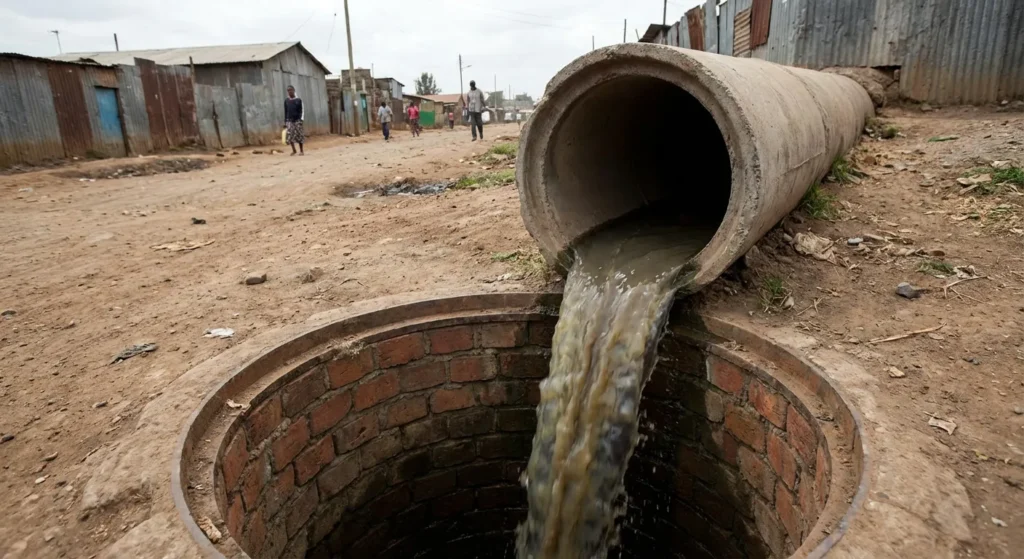
Trade Effluent into Sewer Lines in Kenya: What ‘Consent to Discharge’ Means Under Water (Services) Regulations 2025
The Water (Services) Regulations 2025 have changed how industries, institutions, and commercial facilities in Kenya are allowed to discharge wastewater into public sewer lines. For many factory owners, hospital administrators, mall managers, and facility engineers, the biggest shift is the stricter enforcement of consent to discharge into sewer and mandatory industrial wastewater pre-treatment. These rules are no longer theoretical. Water Service Providers (WSPs) are already preparing inspections, sampling programmes, and enforcement actions ahead of the Watertech Kenya 2026 – Water Technology Trade Exhibition, where compliance will be under the spotlight. Any facility generating trade effluent Kenya-wide must now prove that its wastewater will not damage sewer infrastructure, overload municipal treatment plants, or pollute receiving rivers. This article explains, in practical Kenyan terms, what trade effluent means, how the 2025 regulations work, what parameters you must meet, how pre-treatment systems are designed, and how to secure legal consent to discharge. This is written from the perspective of an engineer who has dealt with real effluent, real regulators, and real consequences on the ground.
Understanding the Kenya Water Quality Regulations 2024
The Kenya Water Quality Regulations 2024 replaced outdated assumptions that sewer connections are automatically safe. The law now recognizes that untreated industrial wastewater damages sewer infrastructure, overloads treatment plants, and contaminates rivers and coastal waters.
Under the updated framework:
- Trade effluent is regulated separately from domestic sewage
- Consent is required before discharge into a public sewer
- Pre-treatment is mandatory for most non-domestic users
- Discharge limits are enforceable through sampling and lab tests
The Water Services Regulatory Board (WASREB), sewer service providers, and NEMA effluent discharge licence inspections are now coordinated. A failure at any level can trigger enforcement.
Who Must Apply for Consent to Discharge
Consent to discharge is required for any activity or facility that produces trade effluent and discharges it, or proposes to discharge it, into a public sewer or municipal wastewater treatment system. This includes, but is not limited to, the following categories:
- All industrial facilities connected to sewer lines, including manufacturing, processing, packaging, and assembly operations that generate non-domestic wastewater
- Commercial buildings and establishments that produce process wastewater, such as hotels, restaurants, laundries, car washes, laboratories, and service centers
- Factories and enterprises operating within Special Economic Zones (SEZs) that discharge effluent to central or shared sewer networks or common treatment systems
- Institutions and large facilities such as hospitals, universities, and campuses that generate wastewater from medical, laboratory, or operational processes
- Any facility utilizing municipal wastewater treatment systems, whether through direct sewer connections or indirect discharge arrangements
- Small-scale units and workshops where trade effluent is generated, regardless of discharge volume, if the wastewater characteristics differ from normal domestic sewage
In regulatory terms, the determining factor is not the size of the facility but the nature of the wastewater generated. Where trade effluent is present, consent to discharge is mandatory.
Old Standards vs New 2024 Discharge Limits
Many facilities still operate based on outdated assumptions from earlier regulations. This is where risk begins.
Table 1: Old vs New Discharge Expectations
| Parameter | Old Assumption (Before 2024) | New 2024 Limit to Sewer |
| BOD | “Sewer will handle it” | ≤ 500 mg/L |
| COD | Rarely tested | ≤ 1000 mg/L |
| pH | Informal checks | 6.0 – 9.0 |
| Oil & Grease | Not monitored | ≤ 10 mg/L |
| Temperature | Ignored | ≤ 40°C |
The key change is enforcement. Sewer operators now test and report. If your sample fails, your consent to discharge into sewer can be suspended immediately.
What Happens If Consent Is Not Taken
Operating without a valid Consent to Discharge exposes a facility to significant legal, financial, and operational risk. Under the Water Services Regulations 2025, discharging trade effluent into a public sewer without consent is classified as an unauthorized and unlawful activity, regardless of whether environmental harm has already occurred.
Consent to discharge is not optional or procedural; it is a legal prerequisite for sewer connection where trade effluent is generated. Failure to obtain or maintain this consent places the facility in direct violation of regulatory requirements and triggers enforcement action.
Possible Actions by Authorities
Water Service Providers (WSPs) and regulators are granted enhanced enforcement powers under the 2025 regulations. When a facility operates without consent, authorities may take one or more of the following actions, depending on the severity and duration of non-compliance.
1. Financial Penalties and Surcharges
Authorities may impose monetary penalties for unauthorized discharge. These can include:
- Fines for operating without consent
- Surcharges based on pollutant load or damage caused to the sewer system
- Backdated charges for historic non-compliance
Such costs are often substantial and may exceed the cost of compliance.
2. Immediate Sewer Disconnection
In cases where unauthorized discharge poses a risk to sewer infrastructure, treatment plants, or public health, the WSP may order immediate disconnection from the sewer system. Disconnection can occur without prolonged notice, particularly where continued discharge may cause damage.
Loss of sewer connection can halt production, force emergency shutdowns, and create additional compliance challenges.
3. Legal and Enforcement Notices
Facilities may be served with formal legal notices, including compliance notices, improvement orders, or enforcement directives. These notices typically require corrective action within strict timelines and may mandate installation of pre-treatment systems, submission of applications, or cessation of discharge.
Failure to comply with such notices escalates enforcement action.
4. Suspension or Shutdown Orders
For serious or repeated non-compliance, regulators may issue partial or full shutdown orders, requiring cessation of operations until consent is obtained and compliance is verified. This directly affects business continuity, contractual obligations, and workforce stability.
5. Civil Liability and Cost Recovery
If unauthorized discharge results in sewer blockages, corrosion, treatment plant failure, or environmental pollution, authorities may recover the full cost of repairs, clean-up, and remedial works from the offending facility.
Business and Reputational Impacts
Beyond regulatory penalties, operating without consent disrupts core business operations. Unplanned shutdowns, emergency retrofits, legal disputes, and loss of regulator confidence can delay projects, impact supply chains, and damage reputation with clients, investors, and authorities.
In a regulatory environment moving toward stricter enforcement and greater transparency, non-compliance is increasingly visible and difficult to rectify after the fact.
Practical Reality
In practical terms, not having consent is not a minor administrative oversight—it is a high-risk operational decision. The consequences extend well beyond paperwork, directly affecting production continuity, financial stability, and regulatory standing.
Obtaining and maintaining consent to discharge is therefore a critical compliance requirement and a key element of responsible, uninterrupted business operations.
What Is Trade Effluent in Kenya?
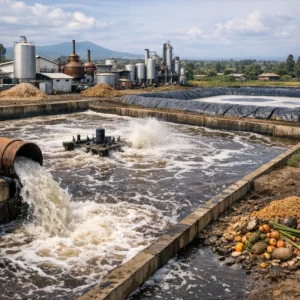
Trade effluent refers to any liquid waste generated from industrial, commercial, or institutional activities that is discharged into a public sewer. In Kenya, this is clearly distinguished from normal domestic sewage coming from homes.
Examples of trade effluent include wastewater from:
- Food and beverage factories
- Hotels, lodges, and large kitchens
- Hospitals and laboratories
- Malls, abattoirs, and slaughterhouses
- Laundries, car washes, and workshops
- Campuses and training institutions with large kitchens or labs
Trade effluent Kenya regulations focus on the quality, quantity, and variability of this wastewater. Unlike domestic sewage, trade effluent often contains high organic load, fats, oils and grease (FOG), chemicals, detergents, disinfectants, solvents, heavy metals, pharmaceuticals, or extreme pH levels.
Under the Water Services Regulations 2025 Kenya, no trade effluent is allowed into a sewer without written consent from the relevant Water Service Provider. This consent is conditional and depends entirely on whether your effluent meets the required standards or has been properly pre-treated.
Meaning of “Consent to Discharge” under the Water Services Regulations 2025
Under the Water Services Regulations 2025, a Consent to Discharge is a formal legal authorization issued by a Water Service Provider (WSP) that permits a facility to discharge treated trade effluent into a public sewer system, subject to defined technical and operational conditions.
This consent is mandatory for any non-domestic effluent that could affect sewer integrity, treatment performance, public health, or the environment. Discharging trade effluent without consent is considered an unlawful connection.
Core Characteristics of Consent to Discharge
1. Facility-Specific and Non-Transferable
The consent is issued for a specific site, process, and operator. It cannot be transferred to another facility, tenant, or owner without formal reassessment and re-approval by the WSP. Any change in occupancy or operational control requires review.
2. Defined Discharge Limits
The consent establishes maximum allowable limits for parameters such as:
- Flow rate and volume
- pH, temperature
- Chemical Oxygen Demand (COD), Biological Oxygen Demand (BOD)
- Suspended solids, fats, oils, grease
- Heavy metals, toxic substances, or specific regulated chemicals
These limits are set to protect sewer infrastructure and downstream treatment plants.
3. Mandatory Sampling and Monitoring Infrastructure
Facilities are required to install approved sampling points, inspection chambers, or monitoring equipment at designated locations. These must allow the WSP to safely and accurately sample effluent at any time.
4. Inspection and Access Rights
The regulations grant WSPs the authority to conduct:
- Routine inspections
- Unannounced or surprise inspections
- Effluent sampling and operational audits
Refusal of access or interference with inspections constitutes non-compliance.
5. Suspension or Revocation for Non-Compliance
If a facility breaches consent conditions—whether through exceedances, unauthorized changes, or failure to cooperate—the WSP may suspend or revoke the consent, either temporarily or permanently.
A Living Approval, Not a One-Time Permit
Consent to discharge is not a static, one-off approval. It is directly tied to the actual quality and characteristics of the effluent being discharged.
Any of the following changes may trigger a reassessment or amendment of consent conditions:
- Changes in production processes
- Increased production capacity or operating hours
- Introduction of new raw materials or chemicals
- Modifications to treatment systems
Facilities are legally obligated to notify the WSP in advance of such changes.
Enhanced Enforcement Powers under the 2025 Regulations
The Water Services Regulations 2025 significantly strengthen WSP enforcement authority. In cases of serious or repeated non-compliance, WSPs may implement one or more of the following measures:
- Immediate disconnection from the public sewer system
- Surcharges and financial penalties for excessive or harmful discharges
- Recovery of costs associated with sewer blockages, corrosion, or treatment damage
- Formal reporting of non-compliant facilities to regulators or relevant authorities
These measures are designed to ensure compliance, cost recovery, and system protection.
Practical Interpretation
In simple and legal terms:
No valid consent means no lawful right to discharge trade effluent into the public sewer.
Facilities operating without consent—or outside consent conditions—are exposed to enforcement action, financial liability, and operational disruption.
Why Pre-Treatment Is Required Before Discharging to Sewer
Public sewer systems in Kenya are designed and operated primarily to collect and convey domestic wastewater, which has relatively predictable flow rates and pollutant characteristics. These systems—and the downstream municipal wastewater treatment plants—are not engineered to handle untreated or poorly controlled trade effluent from industrial, commercial, or institutional sources.
When untreated trade effluent is discharged directly into the public sewer, it can create significant operational, environmental, and public health risks.
Problems Caused by Untreated Trade Effluent
1. Sewer Blockages
Effluent containing high levels of oil, grease, fats, and suspended solids can accumulate within sewer pipes, leading to blockages, reduced hydraulic capacity, sewer overflows, and increased maintenance costs.
2. Corrosion and Structural Damage
Effluent that is highly acidic, alkaline, or sulphide-rich accelerates corrosion of concrete and metal sewer infrastructure. This shortens the service life of pipelines, manholes, and pumping equipment, resulting in premature failure and costly repairs.
3. Toxic Shocks to Municipal Treatment Plants
Discharges containing toxic, inhibitory, or high-strength pollutants can disrupt biological treatment processes at municipal wastewater treatment works. Sudden toxic “shock loads” may kill treatment microorganisms, reduce treatment efficiency, and cause plant upsets.
4. Degraded Final Effluent Quality
When municipal treatment plants are overloaded or destabilized, the quality of the final treated effluent deteriorates, increasing the risk of inadequately treated wastewater being discharged into rivers, lakes, and other receiving water bodies.
Regulatory Basis for Mandatory Pre-Treatment
For these reasons, pre-treatment systems are mandatory for most industries, commercial operations, and institutions generating trade effluent. Pre-treatment is intended to remove or significantly reduce harmful pollutants at source, before the wastewater enters the public sewer network.
This approach protects:
- Sewer infrastructure
- Municipal treatment plant performance
- Downstream aquatic ecosystems
- Public health and regulatory compliance
Objectives of Industrial Wastewater Pre-Treatment
Typical objectives of pre-treatment systems include:
- Reducing Biochemical Oxygen Demand (BOD) and Chemical Oxygen Demand (COD) to prevent overloading of biological treatment processes
- Removing oil, grease, and suspended solids that cause blockages and sedimentation
- Neutralising pH to prevent corrosion and ensure biological compatibility
- Removing toxic or inhibitory substances that could harm treatment plant microorganisms or pose environmental risks
The type and complexity of pre-treatment required depend on the nature of the industrial process and the characteristics of the effluent generated.
Regulatory Position under the Water Services Regulations 2025
The Water Services Regulations 2025 are explicit:
If trade effluent cannot meet sewer discharge limits at the point of discharge, pre-treatment is compulsory.
Facilities are required to install, operate, and maintain adequate pre-treatment systems as a condition of sewer connection and consent to discharge. Failure to do so constitutes non-compliance and may result in enforcement action.
Typical Effluent Discharge Parameters You Must Meet
The table below shows common parameters assessed when applying for consent to discharge into sewer. Actual limits may vary slightly by WSP, but these are typical benchmarks used across Kenya.
Table 1: Typical Sewer Discharge Parameters in Kenya
| Parameter | Typical Limit | Why It Matters |
| pH | 6.0 – 9.0 | Protects pipes and biology |
| BOD (mg/L) | ≤ 500 | Prevents overload at WWTP |
| COD (mg/L) | ≤ 1,000 | Controls organic strength |
| TSS (mg/L) | ≤ 500 | Avoids blockages |
| Oil & Grease (mg/L) | ≤ 50 | Prevents sewer choking |
| Temperature (°C) | ≤ 35 | Protects sewer materials |
Facilities exceeding these limits must install and operate effective pre-treatment systems.
How to Design a Compliant Pre-Treatment ETP
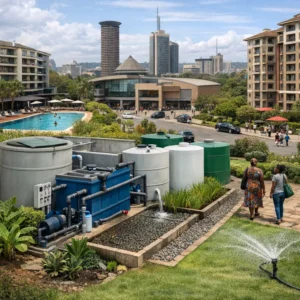
A compliant pre-treatment Effluent Treatment Plant (ETP) is process-specific. There is no one-size-fits-all design.
Key design steps include:
- Detailed effluent characterisation
- Flow measurement (average and peak)
- Identification of critical pollutants
- Selection of appropriate treatment units
Typical pre-treatment units may include:
- Screening and grit removal
- Grease traps or oil-water separators
- Equalisation tanks
- pH correction systems
- Chemical dosing and clarification
- Biological treatment where needed
A well-designed system is robust, easy to operate, and sized for future expansion. Poorly designed systems fail inspections and cost more in the long run.
Step-by-Step Process to Apply for Consent to Discharge
Applying for consent to discharge under the Water Services Regulations 2025 Kenya follows a structured process:
- Initial assessment of wastewater sources
- Baseline effluent sampling and analysis
- Submission of application to WSP
- Review of proposed pre-treatment system
- Installation of ETP and sampling chamber
- Commissioning and performance testing
- Issuance of conditional consent
- Routine compliance monitoring
Skipping steps or submitting incomplete data leads to delays or outright rejection.
Effluent Discharge Fee Structure in Kenya
Most WSPs apply an effluent discharge fee based on pollutant load, not just volume.
Table 2: Comparison of Fee Scenarios
| Scenario | Effluent Quality | Likely Charges |
| No pre-treatment | Very high load | Maximum surcharge |
| Basic pre-treatment | Partial compliance | Reduced surcharge |
| Full compliance | Within limits | Standard sewer tariff |
Investing in proper pre-treatment almost always reduces long-term discharge fees and regulatory risk.
Two Detailed Success Stories
Food Processing Factory in Thika
This mid-sized food processing factory specialised in fruit concentrates and sauces. It discharged high-strength wastewater rich in sugars, suspended solids, and cleaning chemicals. Before 2025, the factory relied on a simple grease trap and discharged directly to the sewer.
When the Water Services Regulations 2025 were gazetted, the local WSP flagged the facility as high risk. Initial sampling showed BOD levels above 2,500 mg/L and frequent pH excursions during cleaning cycles. The factory faced possible sewer disconnection.
A full wastewater audit was conducted. Peak flows were higher than management assumed, especially during night washdowns. A proper pre-treatment system was designed including screening, equalisation, pH control, and a compact biological treatment unit.
Within three months, effluent quality improved dramatically. BOD dropped below 400 mg/L, pH stabilised, and oil levels were consistently compliant. The factory obtained formal consent to discharge and avoided punitive surcharges.
By Watertech Kenya 2026, the factory will be showcasing its compliance journey as part of its sustainability profile.
Large Hospital in Nairobi
The hospital served over 600 beds and generated complex wastewater from wards, theatres, labs, laundries, and kitchens. Its biggest challenge was chemical disinfectants, pharmaceuticals, and high detergent loads.
Routine sewer blockages and complaints from the WSP triggered enforcement action. Under the new regulations, the hospital risked partial sewer closure.
A phased industrial wastewater pre-treatment approach was adopted. Separate streams were identified, and chemical neutralisation and solids removal were prioritised. Flow balancing reduced shock loads, and oil traps were upgraded for kitchen effluent.
The hospital now operates a monitored pre-treatment system with weekly internal checks. Compliance improved, discharge fees stabilised, and regulatory relations improved significantly. The hospital management plans to use this compliance as a case study during Watertech Kenya 2026 discussions on healthcare wastewater.
Why Choose Arnym Eco Green Pvt. Ltd for Your Pre-Treatment System
Arnym Eco Green Pvt. Ltd brings a practical, on-the-ground understanding of trade effluent conditions in Kenya, not just theoretical or textbook solutions. Our systems are designed around real operating environments—actual flow variations, real-world operator constraints, and the expectations of Kenyan regulators.
We focus on solutions that are technically sound, operationally practical, and regulator-ready, ensuring long-term compliance rather than short-term fixes.
Our Key Strengths
Practical, Compliance-Focused Designs
We design pre-treatment systems specifically to meet sewer discharge limits and consent conditions, with simplicity, reliability, and ease of operation built in from the start.
Proven Experience Across Sectors
Our team has hands-on experience working with:
- Manufacturing and processing factories
- Hospitals and healthcare facilities
- Educational institutions and large campuses
This allows us to tailor solutions to the unique effluent profiles of different industries.
End-to-End Support for Consent to Discharge
We support clients throughout the consent to discharge process, including effluent assessment, system justification, documentation support, and alignment with Water Service Provider requirements.
Full Alignment with Water Services Regulations 2025
All systems are designed in line with the Water Services Regulations 2025, ensuring readiness for inspections, sampling, and enforcement under the updated regulatory framework.
A Business Necessity in a Stricter Regulatory Era
As Kenya moves toward stronger enforcement, increased regulatory visibility, and higher scrutiny—particularly with growing sector attention at Watertech Kenya 2026—working with a specialist who understands both engineering and regulation is no longer optional.
It is a business necessity for any facility seeking uninterrupted operations, regulatory confidence, and long-term environmental compliance.
Frequently Asked Questions
How much land is required for a pre-treatment ETP?
Most systems require 40–60% less space than full treatment plants. Compact designs are available.
What is the electricity cost?
Typically 3–6% of your current energy bill, depending on automation level.
Can existing systems be upgraded?
Yes. Many Arnym projects are retrofits, not new builds.
Is consent permanent?
No. It is subject to renewal and performance compliance.
Who collects effluent discharge fees?
Fees are set by sewer service providers based on volume and quality.
How long does installation take?
Most pre-treatment systems are installed within 8–12 weeks.
Don’t Wait for the Notice
Regulators are not slowing down. Delaying action only increases risk and cost. Early compliance allows design flexibility and cost control.
Arnym Eco Green Pvt. Ltd.
Pradip Gupta – CEO
📞 +91 98 6074 6464
Ready to Transform Your Water Management?
Partner with Arnym Eco Green for cutting-edge Raw Water Technologies and Waste Water Technologies. Serving Banks, Hospitals, Food Processing Manufacturers, Shopping Malls, Hotels & Resorts, and Real Estate Developers.
💧 Water Technologies
♻️ Waste Water Technologies
- → Waste Water Technologies
- → Sewage Treatment Plant
- → Effluent Treatment Plant
- → Common Effluent Treatment
- → Grey Water Management
☀️ Solar & Chemicals
🏭 Industries We Serve
- → All Industries
- • Banks
- • Hospitals
- • Food Processing
- • Shopping Malls
- • Hotels & Resorts
- • Real Estate Developers
📚 Resources
Arnym Eco Green Pvt. Ltd.
Eco-Friendly Water Solutions
📍 Address:
1001, Vantage Tower C, Level 10,
NDA Road, Bavdhan,
Pune 411 021 India